

Innovation
The Co-CEOs Steering Waymo Into the Future
Paco Blanco9 min read
Fishwife didn't just make tinned fish cool. It made it a statement. How a small Los Angeles brand rewrote the rules of the American pantry and built a devoted following in the process.

Food, Beverage & Concept Development Contributor
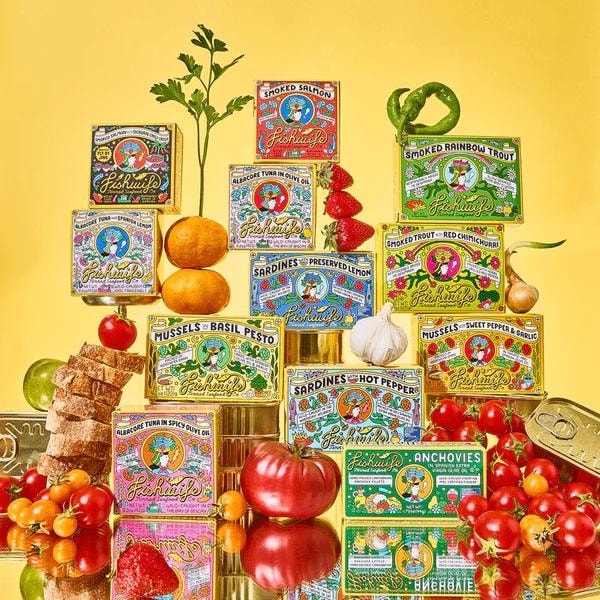
There is a moment, somewhere around 2021, when tinned fish stopped being a pantry afterthought and became a personality. You could track it through the charcuterie boards, the food media coverage, the sudden appearance of Portuguese sardines on restaurant menus that had no business serving them. But if you wanted to find the brand at the center of that shift in America, you'd find Fishwife.
Founded in Los Angeles by Becca Millstein and Caroline Goldfarb, Fishwife launched in late 2020 with a simple but pointed premise: that canned seafood, done right, could be something people were genuinely excited about. Not just a backup protein. Not just emergency shelf food. Something you'd seek out, share, and talk about.
"Canned seafood, done right, could be something people were genuinely excited about. Not just a backup protein. Something you'd seek out, share, and talk about."
The timing was not accidental. The pandemic had sent people back into their kitchens and back to their pantries, and a generation of home cooks who had grown up eating tinned fish in Europe, or who had discovered it through food media, were ready for an American brand that took the category seriously. Fishwife arrived at exactly that moment, with branding that was impossible to ignore.
The packaging is the first thing anyone mentions. Fishwife's tins are illustrated with bold, graphic figures of women, rendered in a style that sits somewhere between vintage travel poster and contemporary art print. The name itself is a reclamation, a word historically used to demean women who worked in the fishing industry, turned into a badge of pride. The design is not decorative. It is argumentative.
That argument extends to the product itself. Fishwife sources from small, sustainable fisheries and aquaculture operations, primarily in the Pacific Northwest and Spain. The line includes smoked Atlantic salmon, smoked rainbow trout, albacore tuna, anchovies, and spicy tinned fish collaborations with other food brands. Each product is packed in high-quality olive oil. The sourcing is transparent. The flavors are serious.
What Fishwife understood early was that the product alone was not enough. The brand needed to build a world around it. They did this through social media, through collaborations with chefs and food writers, and through a genuine investment in the culture of tinned fish, its history, its regional traditions, its place in the broader conversation about sustainable eating.
The result is a community that feels less like a customer base and more like a constituency. People who buy Fishwife tend to evangelize it. They bring tins to dinner parties. They post them on their kitchen shelves. They send them as gifts. The brand has become, for a certain kind of food-conscious consumer, a shorthand for taste and values simultaneously.
"People who buy Fishwife tend to evangelize it. The brand has become a shorthand for taste and values simultaneously."
Fishwife's success is part of a broader realignment happening in the American food market. Consumers, particularly younger ones, are increasingly skeptical of the industrial food system and drawn to brands that can tell a clear story about where their food comes from and how it was made. Tinned fish, with its long shelf life, minimal waste, and deep roots in coastal food cultures around the world, fits that story well.
But Fishwife is not just riding a trend. It helped create one. Before the brand launched, the American tinned fish market was dominated by commodity products with little to distinguish them. Fishwife demonstrated that there was an audience for something better, and that audience has only grown.
The brand has since expanded its retail footprint significantly, moving from direct-to-consumer into specialty grocery and beyond. It has collaborated with some of the most interesting names in American food. And it has done all of this while maintaining the clarity of vision that made it compelling in the first place. The tin is still the message. The message has just reached a lot more people.
About the author
Christie BellinoChristie Bellino is a brand strategist, concept developer, and hospitality industry veteran with deep expertise across food and beverage, restaurant development, and consumer packaged goods. She covers food and beverage innovation, restaurant concepts, CPG brands, and the entrepreneurs redefining how people eat, drink, and experience culture.

