Creative Profiles

The Makers Behind the Movement

In-depth portraits of the artists, designers, and visionaries reshaping culture and commerce.

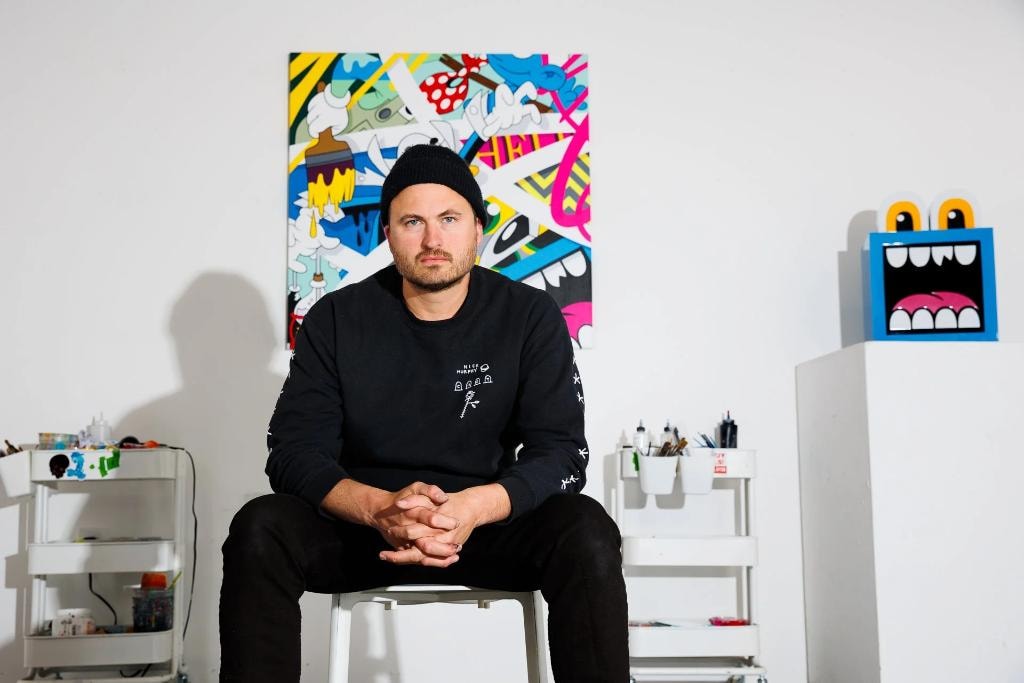
Greg Mike
Creative Profiles

Greg Mike

Artist, Designer & Creative Entrepreneur

Profile No.

01

Atlanta, GA|Street ArtBrand CollaborationsPublic MuralsApparel

For years, companies hired artists to decorate walls. Greg Mike built a business that convinced brands to build campaigns around them instead.

The Atlanta-based artist has collaborated with companies ranging from Coca-Cola and Nike to Spotify, Porsche, Topgolf, Vice Golf, Converse, Ford, and the Atlanta Braves. Yet what makes those partnerships remarkable is not simply the client list. It is the fact that each collaboration still unmistakably feels like Greg Mike. Rather than adapting his work to fit a corporate identity, brands have consistently chosen to step into his world.

That distinction matters. In today's economy, consumers can spot traditional advertising almost instantly. What captures attention instead are experiences that feel authentic, memorable, and worth sharing. Greg Mike has spent more than a decade creating exactly that.

He founded ABV Gallery, helping introduce contemporary artists to collectors while creating a physical home for creative culture. He later expanded into ABV Agency, a creative studio producing large-scale murals, experiential marketing campaigns, installations, and public art activations for national brands. He also launched OuterSpace Project, an annual festival that has transformed Atlanta into an international destination for mural artists and creative collaboration.

Those businesses gave brands something more valuable than artwork. They gave them access to culture.

His partnership with Vice Golf illustrates another lesson in modern brand collaboration. Instead of licensing a single graphic, the collaboration expanded into a limited-edition collection of golf balls, apparel, accessories, and equipment built around his unmistakable visual language. The result was not simply merchandise. It became a collectible release that appealed equally to golfers, design enthusiasts, and longtime fans of his artwork.

His LOUDMOUF character, vibrant color palette, cartoon-inspired illustrations, and playful visual identity have become instantly recognizable regardless of the project. When brands hire Greg Mike, they know exactly what emotional response they are buying: optimism, energy, curiosity, and fun.

Greg Mike has positioned himself as more than an artist for hire. He has become a creative partner capable of helping brands generate attention, strengthen community connections, and create experiences that live well beyond the day they launch. The walls may still be covered in paint. But the real product Greg Mike delivers is cultural relevance.

I never wanted to just make art. I wanted to build a world.
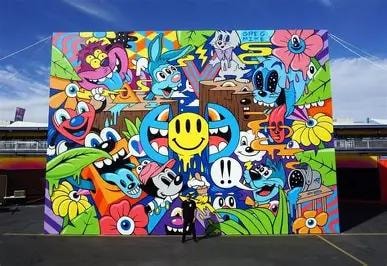
Greg Mike large-scale mural installation, Atlanta, GA
MissMe
Creative Profiles

MissMe

Street Artist & Public Art Activist

Profile No.

02

Montreal, QC|Street ArtWheatpasteFeminist ArtPublic Installations

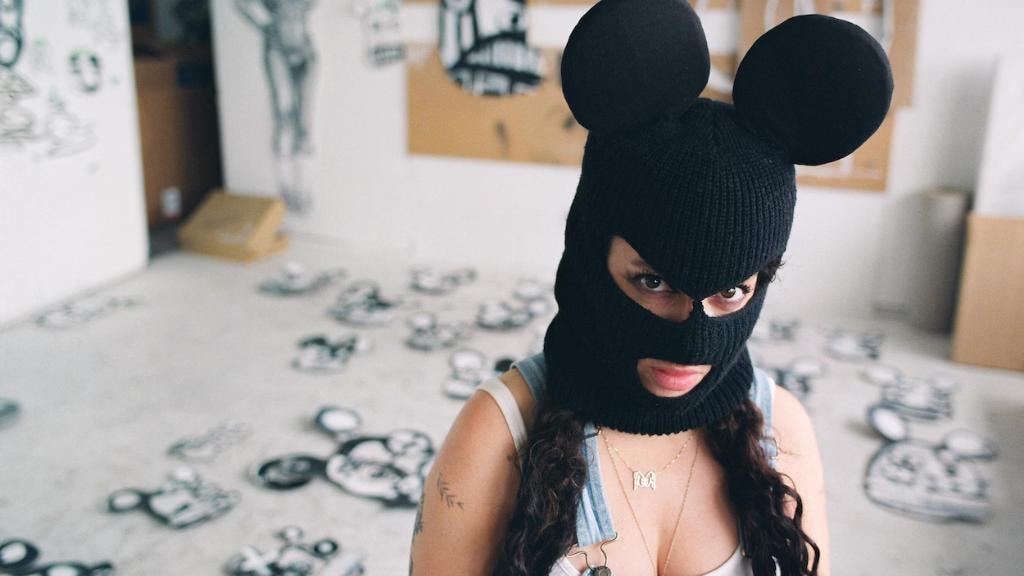
Few contemporary street artists have maintained the level of anonymity, consistency, and cultural relevance that MissMe has achieved.

Known for her bold wheatpaste installations, unmistakable black-and-white portraiture, and unapologetically feminist messaging, the Montreal-based artist has transformed city streets into platforms for conversations about power, identity, capitalism, and gender. Rather than seeking fame through her own image, MissMe has built an internationally recognized artistic practice while deliberately keeping the focus on the work itself.

Her pieces have appeared throughout North America and Europe, often portraying iconic women, activists, artists, and cultural figures reimagined through a distinctly rebellious lens. Whether installed on abandoned buildings, busy intersections, or gallery walls, each work is designed to stop viewers in their tracks and invite a deeper conversation.

MissMe's work exists at the intersection of contemporary art and social commentary. Her large-scale wheatpaste portraits frequently celebrate women who have challenged convention while questioning the systems that continue to shape modern society. Themes of feminism, freedom, consumerism, labor, inequality, and representation are woven throughout her portfolio, creating artwork that is as intellectually engaging as it is visually striking.

In an era where personal branding often overshadows artistic practice, MissMe has taken the opposite approach. She rarely places herself at the center of the story, allowing her work to become the primary voice. That decision has only strengthened her identity as an artist. Her signature visual style has become instantly recognizable, proving that consistency and authenticity can create a more enduring brand than celebrity alone.

Although public art remains central to her practice, MissMe has expanded her work into galleries, museums, exhibitions, books, and collaborations without compromising the integrity of her message. This balance between institutional recognition and independent artistic expression has positioned her as one of Canada's most influential contemporary street artists.

As companies increasingly seek authentic cultural partnerships, artists like MissMe represent something traditional advertising often cannot deliver: credibility. Rather than simply lending aesthetics to a campaign, MissMe brings perspective. Her work resonates because it reflects deeply held beliefs and a consistent creative philosophy rather than following trends or marketing strategies.

MissMe's influence extends well beyond the walls she covers. She has helped redefine what contemporary street art can accomplish by demonstrating that public art can simultaneously challenge, inspire, educate, and build community. In a cultural landscape saturated with content, MissMe continues to prove that the most impactful creative voices are often those willing to ask difficult questions rather than provide easy answers.

The street is not a gallery. It is a forum. Anyone walking past is already part of the conversation.

Find MissMe

Kehinde Wiley
Creative Profiles

Kehinde Wiley

Painter & Cultural Visionary

Profile No.

03

New York, NY|PortraitureFine ArtPublic CommissionsCultural Legacy

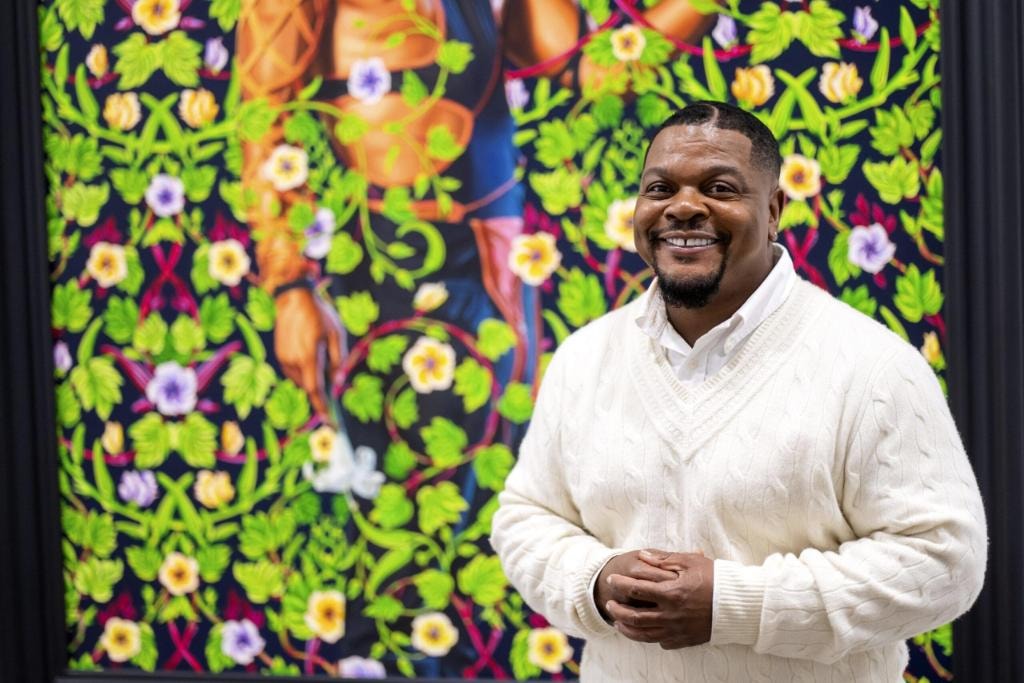
Few contemporary artists have reshaped the conversation around portraiture as profoundly as Kehinde Wiley. Renowned for his monumental paintings that place everyday people in the poses traditionally reserved for kings, queens, military leaders, and aristocrats, Wiley has transformed one of art history's oldest genres into a powerful commentary on identity, representation, and cultural legacy.

His work asks a deceptively simple question: Who deserves to be remembered? By borrowing the visual language of European Old Master paintings and replacing their historical subjects with contemporary individuals from around the world, Wiley challenges centuries of convention while creating images that are both visually breathtaking and culturally significant.

Throughout his career, he has photographed people he encounters in cities across the globe, inviting them into his studio before portraying them against elaborate decorative backgrounds inspired by textiles, wallpaper, botanical motifs, and historical ornamentation. The resulting portraits blur the line between classical tradition and contemporary culture. Rather than merely referencing art history, Wiley rewrites it.

In 2018, Wiley became the first Black artist commissioned to paint the official presidential portrait of Barack Obama for the Smithsonian's National Portrait Gallery. The portrait departed dramatically from traditional presidential imagery. Rather than depicting Obama within a formal government setting, Wiley surrounded him with vibrant foliage representing places central to his life and heritage. The painting became an instant cultural landmark, attracting record attendance and introducing Wiley's work to millions of people around the world.

Beyond his own artistic practice, Wiley has established a global studio model that allows him to execute ambitious projects while maintaining extraordinary technical standards. His work spans painting, sculpture, stained glass, and monumental public commissions, with exhibitions throughout North America, Europe, Africa, and Asia.

Although Wiley's practice remains firmly grounded in fine art, his influence extends into fashion, design, publishing, philanthropy, and cultural institutions. Organizations are drawn not simply to his aesthetic, but to the ideas his work represents. His paintings communicate excellence, dignity, craftsmanship, and inclusion.

Kehinde Wiley has accomplished something rare in contemporary art. He has created work that feels timeless while speaking directly to the present. His portraits honor classical technique without being confined by tradition. They challenge established narratives without sacrificing beauty. And they remind viewers that representation is not simply about who appears in a painting, but about who is seen, remembered, and celebrated throughout history.

I want to create a conversation between the past and the present, between the powerful and the powerless.

Lucy Sparrow
Creative Profiles

Lucy Sparrow

Textile Artist & Immersive Experience Creator

Profile No.

04

London, UK|Felt ArtImmersive InstallationsExperiential RetailBrand Collaborations

Walk into a Lucy Sparrow exhibition and your brain immediately begins negotiating between reality and imagination.

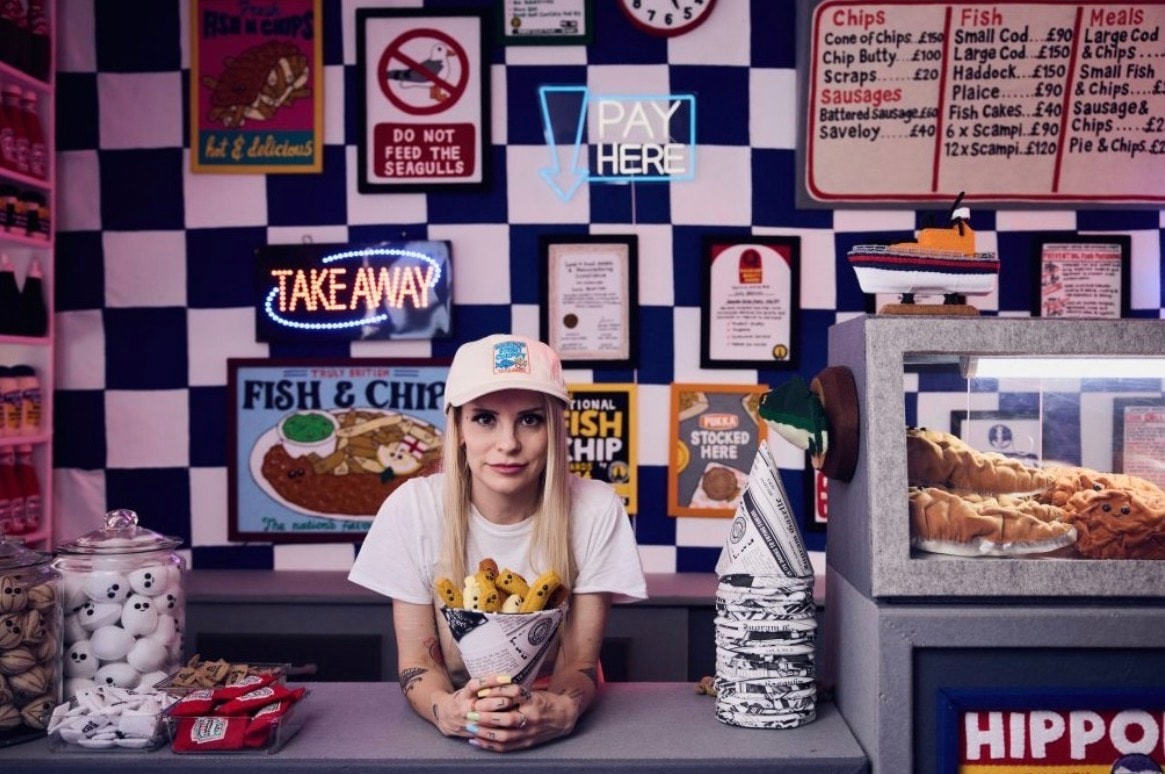
The shelves look authentic. The products are instantly recognizable. The shopping baskets, checkout counters, handwritten signs, and overflowing displays all feel familiar. Then you reach for a carton of milk, a bag of chips, or a bunch of bananas and realize every single item has been meticulously hand-sewn from felt.

What could have remained a charming craft project has become one of the most recognizable artistic brands in contemporary art. Lucy Sparrow didn't simply build an art career. She built an experience.

Many artists begin with a blank canvas. Lucy Sparrow begins with everyday life. A neighborhood convenience store. A pharmacy. A butcher shop. A grocery market. Instead of inventing fantasy worlds, Sparrow transforms ordinary places into immersive installations, recreating every detail with extraordinary precision. Every package is stitched by hand. Every label is individually embroidered. Every shelf is thoughtfully merchandised.

One of Sparrow's greatest business achievements is consistency. Long before visitors recognize the name of an exhibition, they recognize the artist behind it. Whether she's transforming a supermarket, corner store, pharmacy, or produce market, Sparrow's visual language remains unmistakable. Bright colors, playful wit, obsessive craftsmanship, and immersive storytelling have become creative assets audiences immediately associate with her name.

Perhaps Sparrow's most innovative idea is that her exhibitions don't simply display artwork. They function like stores. Visitors browse aisles, carry shopping baskets, interact with attendants, and purchase felt versions of familiar products. The shopping experience itself becomes part of the artwork. Collectors don't simply acquire a sculpture. They leave carrying what looks like groceries.

During SCOPE at Miami Art Week, she partnered with legendary DJ Fatboy Slim, who stepped behind the counter of her immersive felt installations as an employee rather than a celebrity guest. In 2023, he helped serve customers inside Feltz Bagels, and in 2024 he returned to her Blessed Be the Fruit produce stand as Fruitboy Slim, enthusiastically selling hand-sewn felt fruits and vegetables to collectors, fans, and curious visitors. The collaboration wasn't a traditional celebrity endorsement. It was performance art.

Artificial intelligence can generate artwork in seconds. Factories can mass-produce nearly anything. Lucy Sparrow's work moves deliberately in the opposite direction. Every object represents hours of cutting, stitching, sewing, and assembling by hand. That commitment to craftsmanship has become increasingly valuable in an age dominated by automation.

In today's economy, attention is one of the world's most valuable currencies. Lucy Sparrow earns it not through shock value or spectacle, but through delight. She hasn't just created immersive works of art. She's built a globally recognized creative business around joy itself.

I never wanted people to just look at the work. I wanted them to feel like they were inside it.

Tristan Eaton
Creative Profiles

Tristan Eaton

Muralist, Designer & Brand Collaborator

Profile No.

05

New York, NY|Large-Scale MuralsBrand CollaborationsToy DesignStreet Art

Tristan Eaton did not start on a wall. He started on a toy. In the early 2000s, Eaton was one of the defining figures of the designer toy movement, creating limited-edition collectibles that blurred the line between product design and fine art. That foundation, building objects that people wanted to own and display, turned out to be the perfect training ground for an artist who would go on to cover entire city blocks in paint.

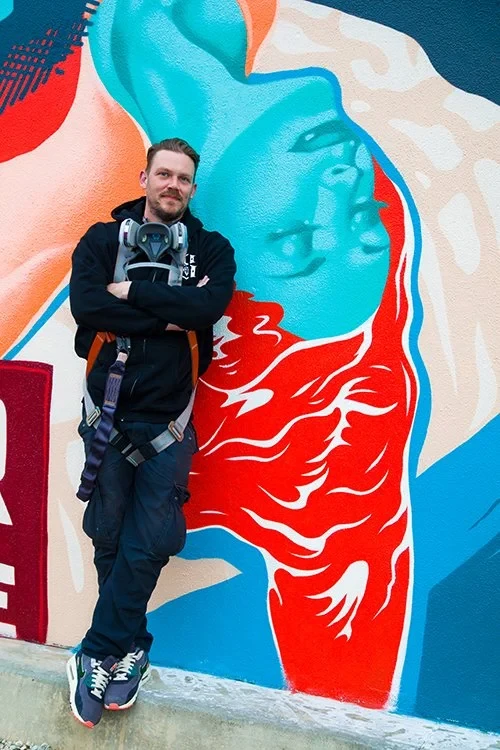
Born in Los Angeles and based in New York, Eaton developed a visual language that is immediately recognizable: layered compositions, bold graphic linework, and a palette that manages to feel both street-worn and meticulously crafted. His murals are not simply large paintings. They are dense, narrative works that reward close inspection, each layer revealing details that disappear from a distance.

His commercial career has been equally ambitious. Eaton has collaborated with some of the most recognizable brands in the world, including Levi's, Nike, Hennessy, and Absolut Vodka. These are not the kind of partnerships where a brand licenses an artist's existing work and slaps it on a product. Eaton builds campaigns from the ground up, working with creative teams to develop concepts that feel genuinely integrated rather than bolted on.

One of his most celebrated brand collaborations came with Hennessy, for whom he created a series of large-scale murals and limited-edition bottle designs that toured internationally. The project demonstrated what Eaton does better than almost anyone: translate a brand's identity into visual language that feels authentic to the street art world without losing the commercial clarity that makes it useful to a marketing team.

In New York, his murals have become landmarks. A massive portrait of Marilyn Monroe on the Lower East Side drew international attention and became one of the most photographed walls in the city. His work in Detroit, commissioned as part of the city's ongoing cultural revitalization, brought national press coverage and helped establish him as one of the artists most associated with the idea that public art can be a genuine economic and civic force.

Eaton has also been deliberate about building a business infrastructure around his practice. He runs a studio that handles everything from initial concept development to final installation, working with a team that allows him to take on projects at a scale that would be impossible for a solo artist. That operational discipline, rare in the street art world, has made him a reliable partner for brands and institutions that need to deliver on tight timelines and specific creative briefs.

What distinguishes Eaton from many of his peers is his fluency across contexts. He is equally comfortable in a gallery, on a building facade, in a boardroom, or in a product design meeting. That range has made him one of the most commercially successful muralists working today, and one of the clearest examples of how the skills developed in street art, speed, scale, adaptability, and an instinct for public impact, translate directly into business value.

I want my work to feel like it belongs to the street, even when a brand is paying for it. The moment it feels like an ad, I've failed.

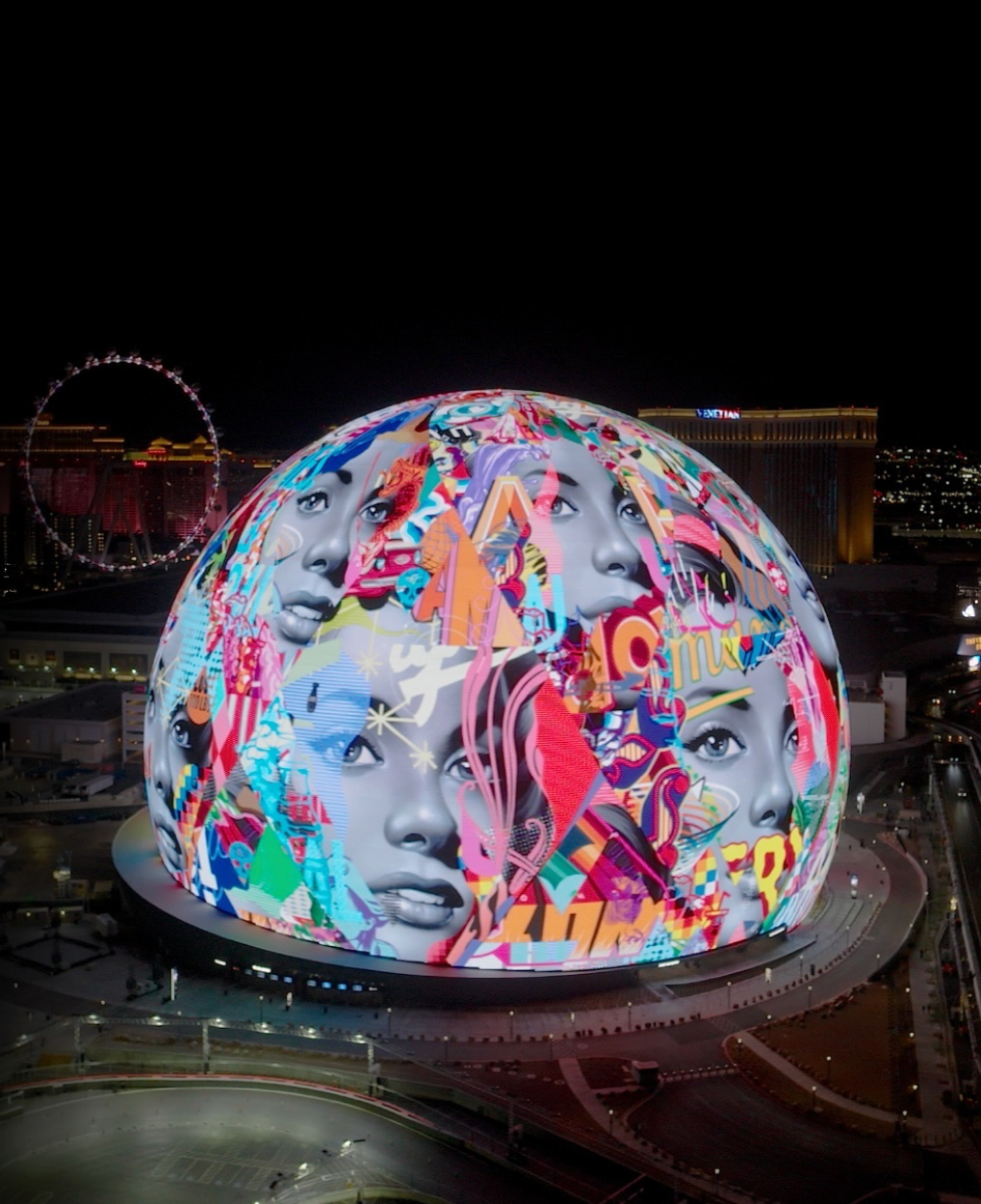
Tristan Eaton's artwork displayed on the Sphere, Las Vegas
Damien Hirst
Creative Profiles

Damien Hirst

Artist & Global Creative Brand

Profile No.

06

London, UK|Contemporary ArtSculptureInstallationsCultural Landmarks

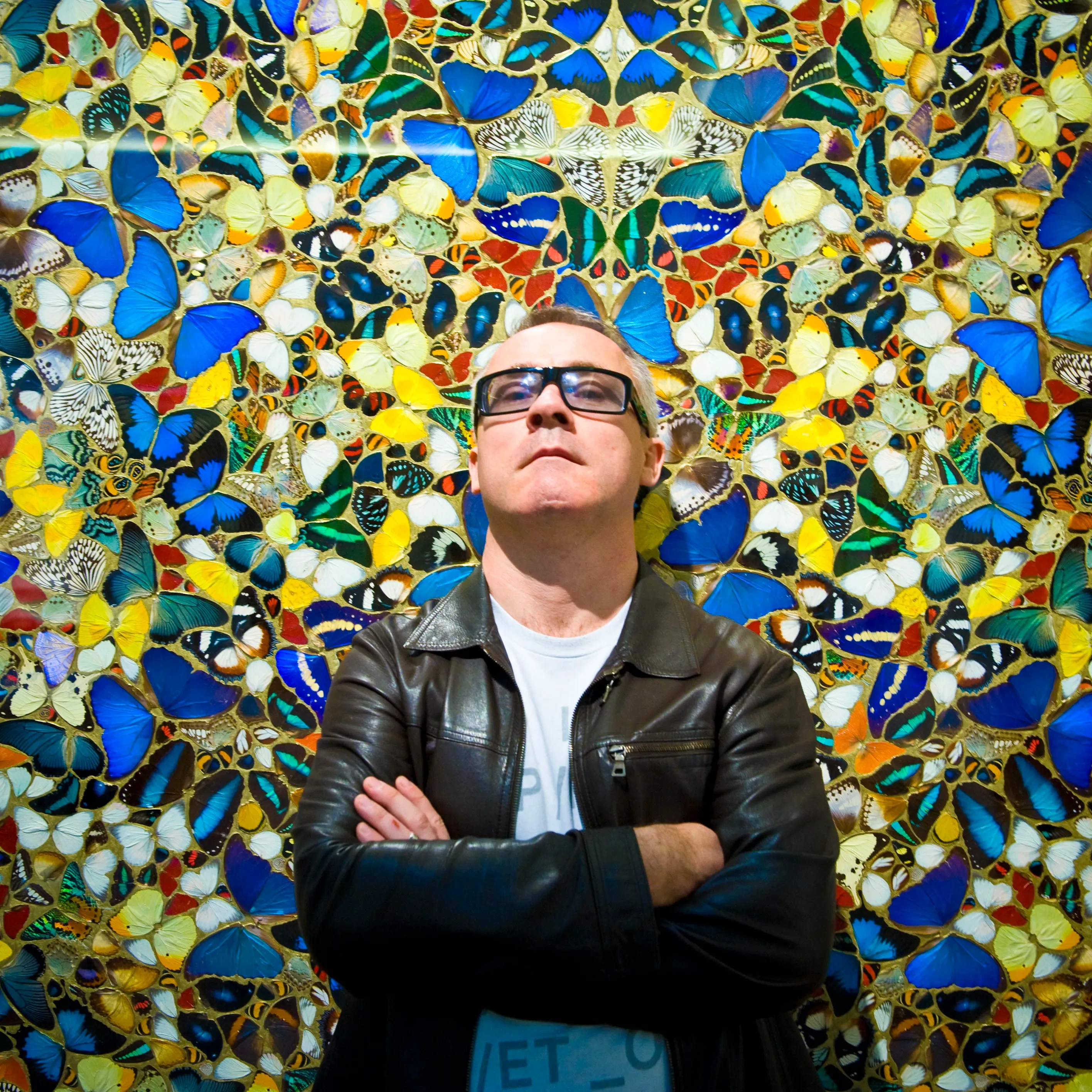
Few contemporary artists have shaped modern art quite like Damien Hirst. Instantly recognizable for his medicine cabinets, formaldehyde animals, butterfly installations, and colorful Spot Paintings, Hirst has spent more than three decades challenging the way collectors, critics, and the public define art. Whether celebrated as a visionary or criticized as a provocateur, one thing is undeniable: Damien Hirst transformed contemporary art into a global conversation.

As one of the leading figures of Britain's Young British Artists movement in the 1990s, Hirst built a career around confronting themes of mortality, science, beauty, and consumer culture. His work often asks uncomfortable questions. Why are we fascinated by death? Why do we assign value to objects? What makes something art in the first place?

Those questions have made him one of the world's most recognizable living artists.

Unlike many artists whose work is experienced primarily inside museums, Hirst's pieces appear in hotels, private clubs, restaurants, airports, corporate collections, and public institutions around the world. One of the most memorable examples can be found inside Soho House Berlin, where his enormous spray-painted Shark greets visitors in the lobby. Created directly on construction boards before the club officially opened in 2010, the work has become one of the defining pieces in Soho House's global art collection.

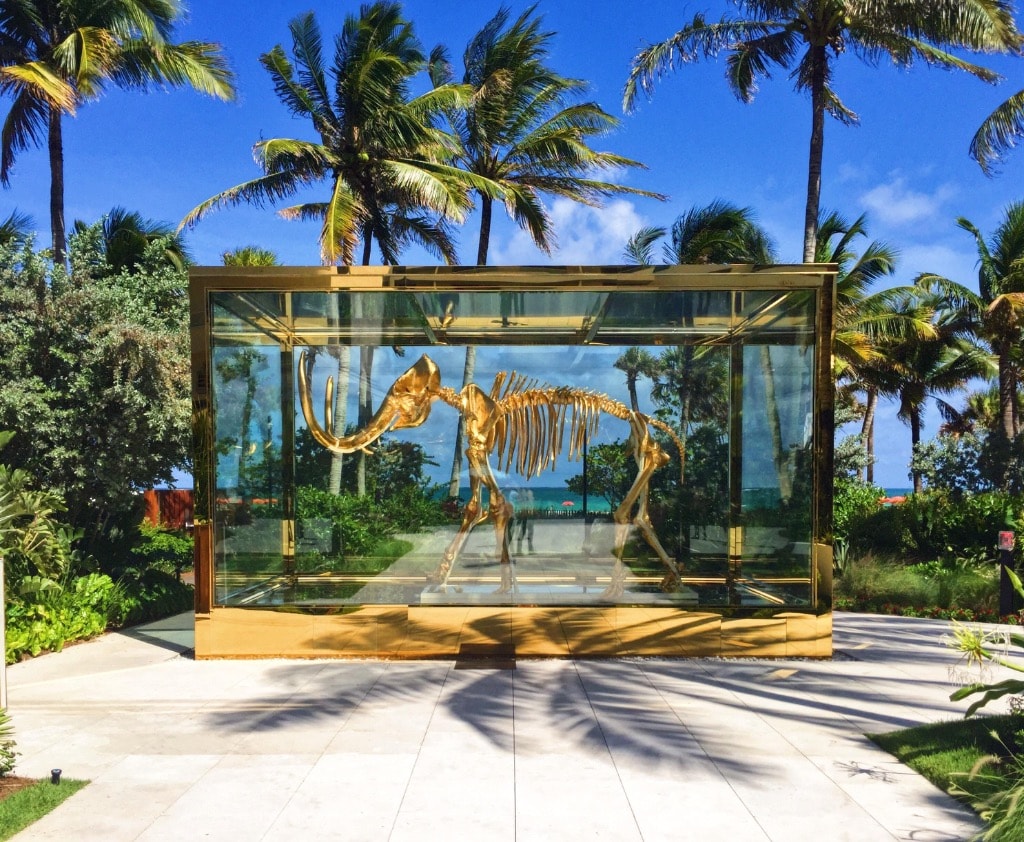
Thousands of miles away in Miami Beach, Hirst created an entirely different kind of landmark. Outside Faena Miami Beach, between the hotel and the Atlantic Ocean, stands Gone But Not Forgotten, an almost ten-foot-tall woolly mammoth skeleton covered in 24-karat gold leaf and enclosed within a monumental glass vitrine. Equal parts sculpture, spectacle, and philosophical statement, the piece has become one of Miami's most photographed works of public art.

The juxtaposition is classic Hirst. A prehistoric creature rendered in precious gold sits against a backdrop of turquoise water and swaying palms, forcing viewers to contemplate extinction, luxury, mythology, and human ambition all at once. At Faena, the sculpture doesn't simply decorate. It anchors the entire experience, turning the hotel's gardens into an open-air gallery where hospitality and contemporary art become inseparable.

Perhaps Hirst's greatest achievement isn't simply creating memorable works. It's making contemporary art part of everyday life. Collectors discuss his auction records. Fashion designers borrow his visual language. Interior designers reference his color palettes. Luxury hotels commission his work not simply to decorate a space, but to define it.

Whether it's the unmistakable shark greeting guests at Soho House Berlin or the gleaming golden mammoth standing watch over the beach at Faena Miami Beach, Hirst's art has become inseparable from the identity of the places that house it. These are destinations where travelers arrive expecting exceptional hospitality but leave talking about the artwork. That may be Damien Hirst's greatest accomplishment.

I want to make work that everyone can relate to, that makes them feel something, that changes the way they see the world.

Gone But Not Forgotten, 24-karat gold leaf woolly mammoth skeleton, Faena Miami Beach
Yayoi Kusama
Creative Profiles

Yayoi Kusama

Artist, Author & Global Cultural Phenomenon

Profile No.

07

Tokyo, Japan|Infinity RoomsPolka Dot PaintingsSculptureBrand Collaborations

There are artists who become famous. There are artists who become brands. And then there is Yayoi Kusama, an artist who has become, at 97, something closer to a cultural force of nature.

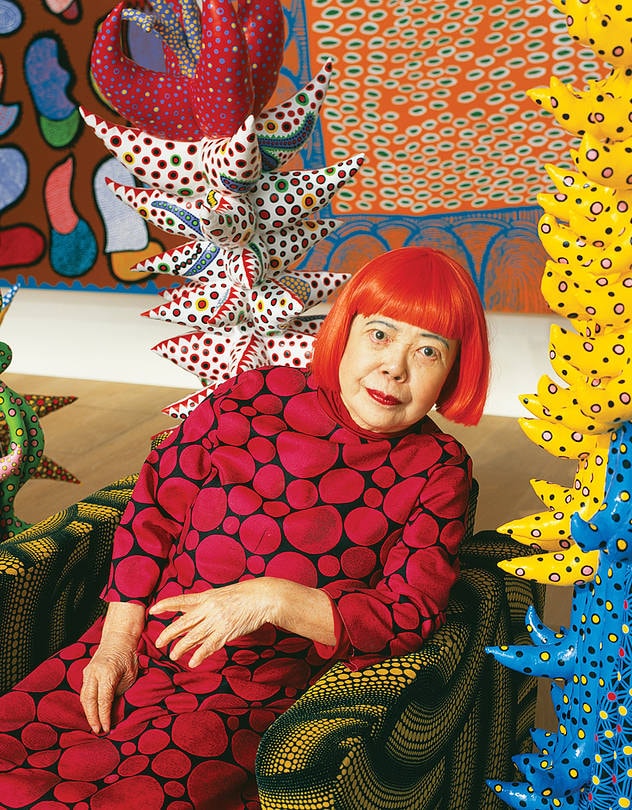
Born in Matsumoto, Japan in 1929, Kusama began drawing obsessively as a child, covering surfaces in dots and nets as a way of managing the hallucinations she experienced from an early age. What began as a coping mechanism became a lifelong artistic language. The polka dot, endlessly repeated, endlessly varied, is now one of the most recognizable visual signatures in contemporary art.

Kusama moved to New York in 1958 and spent the 1960s at the center of the avant-garde, staging happenings, creating infinity net paintings, and building immersive environments that anticipated the experiential art movement by decades. She was radical, prolific, and largely overlooked by the mainstream art market. In 1973, she returned to Japan and voluntarily entered a psychiatric institution in Tokyo, where she has lived ever since, continuing to work every day from a studio across the street.

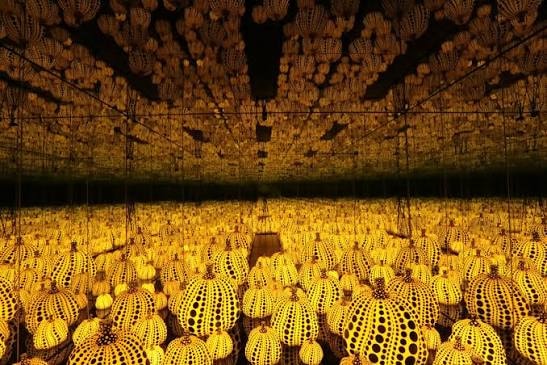
The second act of Kusama's career has been extraordinary. Beginning in the 1990s and accelerating through the 2000s and 2010s, her work was rediscovered by a new generation of collectors, curators, and eventually the general public. Her Infinity Mirror Rooms, immersive installations in which mirrored walls and LED lights create the illusion of infinite space, became some of the most photographed and visited artworks in the world. Museum exhibitions sold out months in advance. Lines stretched around city blocks.

The commercial dimension of Kusama's practice has been equally remarkable. Her 2012 collaboration with Louis Vuitton, conceived with Marc Jacobs, was one of the most successful artist-brand partnerships in fashion history. Polka-dotted bags, shoes, and accessories sold out globally. The collaboration was revived in 2023 with a new collection and a series of immersive retail installations that turned Louis Vuitton flagships into Kusama environments. Animatronic figures of the artist appeared in store windows worldwide, painting dots in real time.

What makes Kusama's commercial success remarkable is that it has not diminished her critical standing. She remains one of the most exhibited living artists in the world, with major retrospectives at the Tate Modern, the Whitney Museum, and the Museo Reina Sofia drawing record attendance. The work that sells millions of dollars of luxury goods is the same work that fills museums. The dots are the same dots.

Kusama's story is also a story about persistence across an extraordinary span of time. She has been making art for more than seven decades, through periods of obscurity and periods of global celebrity, through changing art markets and changing cultural tastes. The consistency of her vision, the dots, the nets, the infinity rooms, the pumpkins, has become its own kind of power. In a world that rewards novelty, she has built an empire on repetition.

I want to show that art heals. I want to show that art saves lives.

Kusama's Infinity Mirror Room, one of the most visited and photographed artworks in the world
Shepard Fairey
Creative Profiles

Shepard Fairey

Artist, Designer & Cultural Provocateur

Profile No.

08

Los Angeles, CA|Street ArtGraphic DesignBrand CollaborationsPolitical Art

In 1989, a 19-year-old art student at the Rhode Island School of Design printed a sticker featuring the face of professional wrestler Andre the Giant alongside the word OBEY. He pasted it on walls, skateboards, and street signs around Providence. He had no particular message in mind. The point, he later explained, was simply to make people notice something they hadn't noticed before, to interrupt the visual landscape and make a viewer ask why.

That sticker became one of the most recognizable images in street art history. The OBEY Giant campaign spread from Providence to cities around the world, evolving from a guerrilla sticker campaign into a global brand, a clothing line, a gallery practice, and eventually one of the most commercially successful creative enterprises in contemporary art. Shepard Fairey had stumbled onto something important: the power of a simple, repeatable image deployed at scale.

Fairey's career has always operated at the intersection of art, commerce, and politics, a space that makes many people uncomfortable and that he has navigated with unusual skill. His OBEY clothing brand, launched in 2001, generates tens of millions of dollars in annual revenue while maintaining the aesthetic credibility of a street art operation. His studio, Studio Number One, has produced campaigns for clients ranging from Levi's and Hasbro to environmental organizations and political campaigns.

The moment that defined Fairey's public profile came in 2008, when he created the Hope poster for Barack Obama's presidential campaign. The image, a stylized portrait of Obama in red, white, and blue with the word HOPE beneath it, became the defining visual artifact of that election cycle. It appeared on magazine covers, in museum collections, and on walls around the world. The Associated Press later disputed the copyright of the photograph Fairey had used as a reference, leading to a legal settlement that became its own chapter in the ongoing conversation about appropriation, authorship, and artistic practice.

Fairey's relationship with brands has been one of the most studied in contemporary art. He has collaborated with companies including Pepsi, Levis, and Hennessy, and has been criticized by some in the street art community for what they see as a contradiction between his anti-establishment imagery and his commercial partnerships. Fairey's response has been consistent: the goal is to use the reach that commercial work provides to amplify messages that matter. The OBEY brand funds the studio. The studio funds the activism.

His environmental work has become increasingly central to his practice. Large-scale murals addressing climate change, biodiversity loss, and corporate accountability have appeared in cities from Los Angeles to Paris. These are not simply decorative works. They are designed to be photographed, shared, and discussed, to function as public conversation starters in the same way the original OBEY stickers did, but with a specific political purpose.

What Fairey has built over three decades is something genuinely unusual: a creative practice that is simultaneously a fine art career, a commercial design business, a clothing brand, and a political communications operation. Each element reinforces the others. The street art gives the brand credibility. The brand funds the studio. The studio produces the political work. The political work generates the cultural conversation that keeps the street art relevant.

Few artists have figured out how to make those pieces fit together. Fairey has been doing it for thirty-five years.

I want to make work that makes people think. If it also makes them feel something, that's even better.

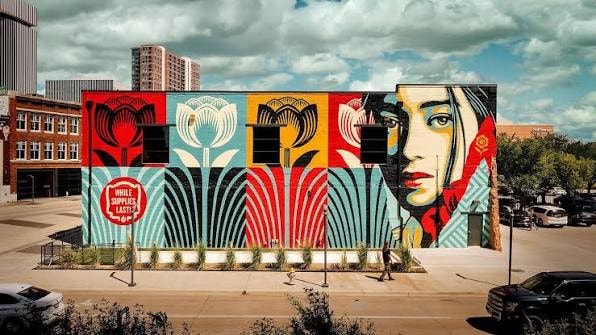
Shepard Fairey's bold graphic language has defined street art and political visual culture for three decades
KAWS
Creative Profiles

KAWS

Artist, Designer & Global Brand

Profile No.

09

Brooklyn, NY|Street ArtCollectiblesBrand Collaborations

In the mid-1990s, a teenager from Jersey City named Brian Donnelly was doing something that would get him arrested if caught. He was breaking into bus shelter advertising cases across New York City, removing the posters inside, painting over them with his own characters, and then returning them to the shelters. The ads would go back up, looking almost normal, except that the faces had been replaced with cartoon skulls and crossed-out eyes. He signed them KAWS. Nobody knew who he was. That was part of the point.

Three decades later, KAWS is one of the most recognizable names in contemporary art and one of the most commercially successful creative practices in the world. His sculptures sell at auction for millions of dollars. His collaborations with Nike, Dior, Uniqlo, and Supreme have generated hundreds of millions in revenue. His vinyl figures, once sold at small toy shops, now command thousands of dollars on the secondary market. A 2019 auction at Sotheby's Hong Kong saw his painting sell for $14.7 million, more than 100 times its estimate.

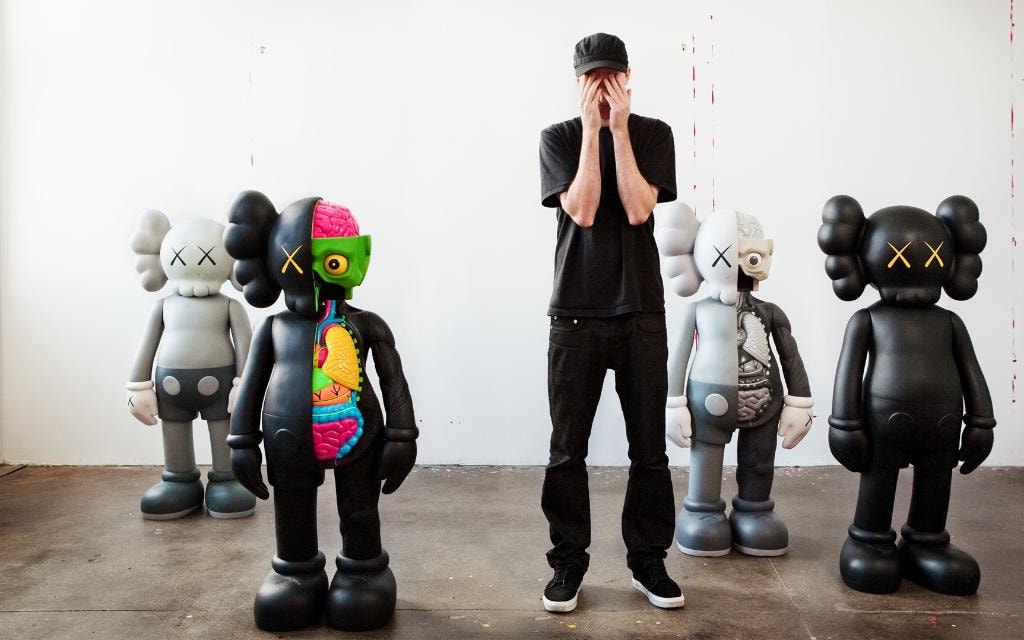
Donnelly grew up in Jersey City and showed an early aptitude for drawing. He enrolled at the School of Visual Arts in New York, where he studied illustration, and graduated in 1996. By that point he had already been doing his street interventions for a couple of years, developing the visual language that would define his career: the XX eyes, the cartoon proportions, the characters he called Companions. The street work was not just vandalism. It was a genuine artistic practice, one that engaged with the visual language of advertising and popular culture in a way that was simultaneously critical and affectionate.

In the late 1990s, KAWS traveled to Japan and discovered a culture that was uniquely receptive to what he was doing. Japanese streetwear and toy culture had developed a sophisticated appreciation for the intersection of art, design, and commerce. He began collaborating with Japanese brands, producing limited-edition vinyl figures that sold out immediately. What KAWS understood, perhaps before most artists of his generation, was that the collectible object was a different kind of art distribution. It had the emotional resonance of a toy and the cultural cachet of art, and it could be produced in editions that made it accessible to people who could never afford a painting.

The collaborations were always selective. When Nike came calling, Donnelly did not simply license his characters for a generic product. He worked closely on the design, ensuring that the result felt like a genuine creative collaboration rather than a logo placement. The Uniqlo collaboration deserves particular attention. By partnering with a mass-market retailer to produce affordable T-shirts featuring his characters, KAWS made a deliberate choice to democratize access to his work. The shirts sold for around $20. They sold out globally within hours. The queues outside Uniqlo stores in cities around the world looked more like sneaker drops than clothing retail.

The large-scale public installations have been particularly significant. KAWS: HOLIDAY, a series of giant inflatable Companion figures installed in locations including Hong Kong's Victoria Harbour, Seoul's Lotte World Tower, and Taipei, drew massive crowds and generated enormous media coverage. These were not gallery shows for art world insiders. They were public spectacles that brought his work to millions of people who had never set foot in a contemporary art museum.

The business lessons embedded in the KAWS story run counter to some conventional wisdom about how creative careers are built. Consistency matters more than novelty. The XX eyes and Companion characters have been present in his work for thirty years. He has not chased trends or reinvented himself to stay relevant. Accessibility and exclusivity can coexist. The $20 Uniqlo shirt and the $14 million auction painting are both genuine KAWS products. Brian Donnelly started by putting his characters where nobody asked for them. He ended up building something that the world's most powerful brands would pay generously to be associated with.

I never thought about building a brand. I was just trying to make work that felt honest. Everything else followed from that.

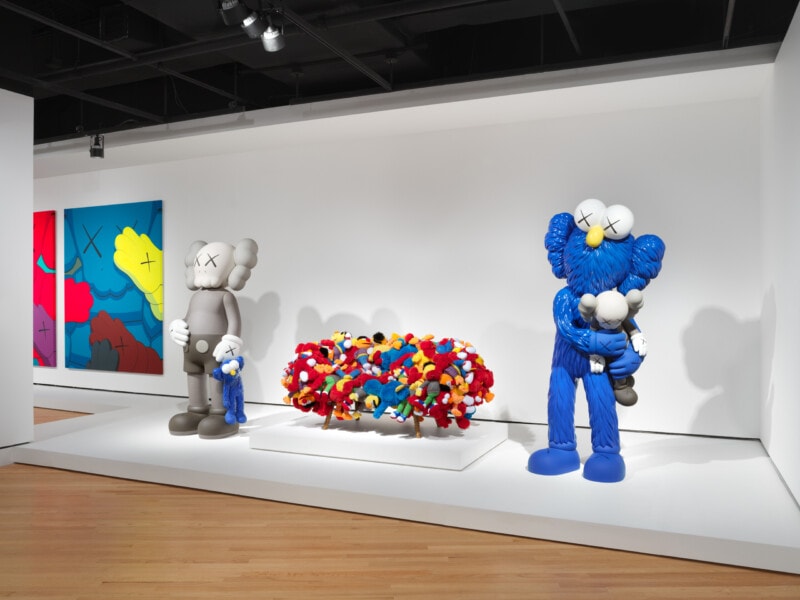
KAWS's Companion characters have appeared in galleries, public spaces, and collaborations with the world's most recognizable brands
Es Devlin
Creative Profiles

Es Devlin

Stage Designer & Large-Scale Installation Artist

Profile No.

10

London, UK|Stage DesignLive ExperiencePublic Art

There is a moment in almost every major concert tour when the audience stops thinking about the music and simply stares. The stage has done something unexpected. A structure has risen or collapsed. Light has transformed a familiar space into something unrecognizable. The performer has become part of an environment so carefully constructed that the line between architecture and theater has disappeared entirely. That moment, more often than not, belongs to Es Devlin.

Over the past two decades, the British set and stage designer has built some of the most visually arresting live experiences in the world. Her clients include Beyonce, Adele, Kanye West, U2, The Weeknd, Miley Cyrus, and Lady Gaga. She has designed the Super Bowl halftime show, the closing ceremony of the London 2012 Olympics, and productions for the Royal Opera House, the National Theatre, and the Metropolitan Opera. She has collaborated with Louis Vuitton, Chanel, and Burberry. She has created public art installations on three continents.

Devlin runs Studio Es Devlin, a London-based practice that operates at the intersection of architecture, theater, and large-scale installation. The studio is deliberately small for the volume of work it produces, a reflection of her belief that the quality of thinking matters more than the size of the team. What she sells is vision: the ability to translate an artist's identity, a brand's values, or a cultural moment into a physical environment that an audience will remember long after they leave.

Her influence on the fashion and luxury industries has been substantial. Her work with major houses helped shift how brands think about the runway show and the product launch. She demonstrated that the show itself could be a cultural statement, something people talked about and remembered not just for the clothes but for the world that surrounded them. That lesson has spread well beyond fashion. Brands across industries now invest heavily in the physical environments they create for consumers, and the underlying logic is Devlin's: the experience of a brand is inseparable from the space in which you encounter it.

In recent years, Devlin has moved increasingly toward public art. Her installation Please Feed the Lions, commissioned for the fourth plinth in Trafalgar Square, invited passersby to speak words into a microphone and watch them appear on a glowing lion sculpture. Her work Forest for Change, created for the United Nations Climate Change Conference, used light and language to make the scale of deforestation viscerally legible to people who would never visit a rainforest.

One of the most instructive things about her career is how she approaches collaboration. She does not arrive with a signature style that she imposes on every project. She arrives with a process: deep listening, rigorous questioning, and a commitment to finding the visual language that belongs to this artist, this moment, this audience. Artists and brands return to her not because she gives them what they expect, but because she gives them something they could not have imagined on their own.

Devlin has spoken publicly about her interest in the relationship between technology and live experience, particularly the question of what presence means in an era when so much of life has migrated to screens. Her answer is not to compete with screens but to do what screens cannot: to build environments that require a body in a room, that depend on the fact that you are here, in this place, at this moment, with these other people. In an economy that has spent a decade trying to digitize everything, that turns out to be a genuinely scarce and valuable thing to offer.

Every stage is a question. What does this person need to say, and what is the largest, most honest way to say it?

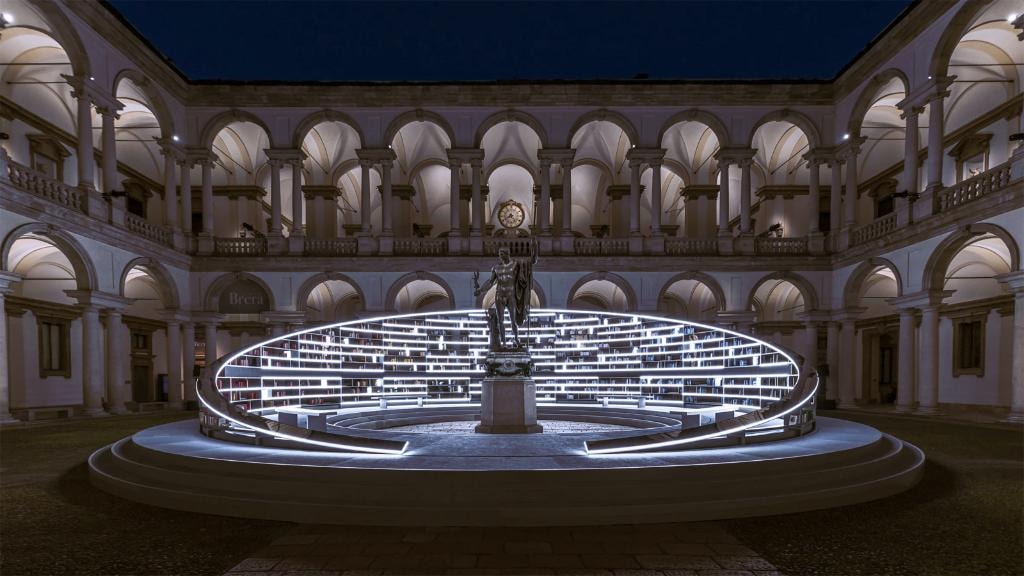
Library of the World, Pinacoteca di Brera, Milan — one of Devlin's landmark public art installations

More Profiles

New profiles dropping weekly.

We are just getting started. Subscribe to get each new profile delivered to your inbox.