
Innovation
Sam Altman and the Race to AGI
Paco Blanco10 min read
It started as a note-taking app. It became the platform that millions of teams run their entire operations on. The story of how Notion quietly became one of the most influential companies in tech.

Digital Marketing & Tech Contributor
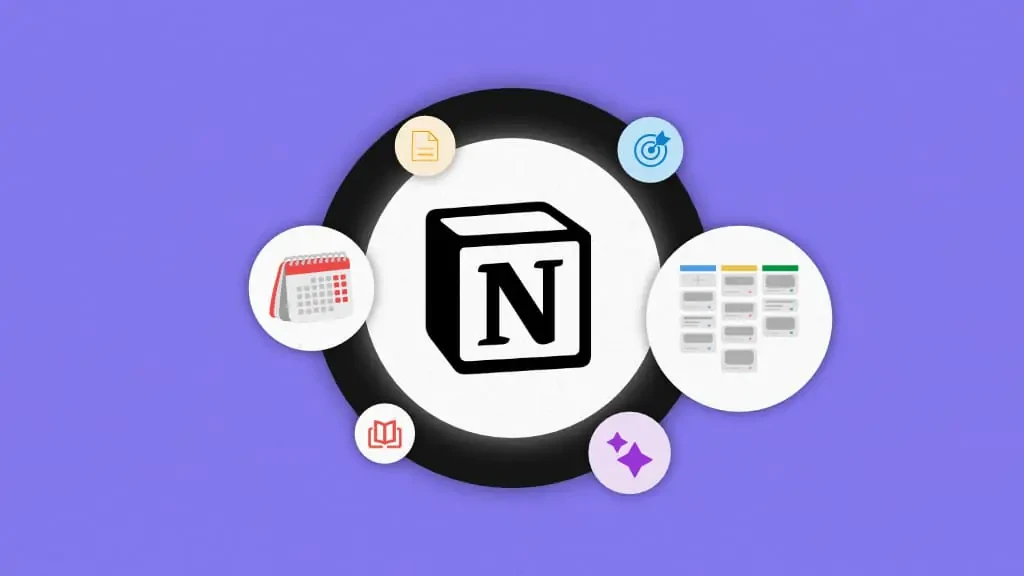
In 2018, Notion had eight employees and was running out of money. The product had been rebuilt from scratch twice. The team had relocated to Kyoto, Japan, to cut costs. Ivan Zhao, the company's co-founder and CEO, was coding features during the day and answering customer support tickets at night. By most conventional measures, the company was failing.
Today, Notion is valued at $10 billion, used by more than 30 million people, and has become the default productivity platform for a generation of startups, creative agencies, and knowledge workers who have decided that the combination of documents, databases, wikis, and project management tools it offers is simply better than the alternatives.
"In 2018, Notion had eight employees and was running out of money. Today it is valued at $10 billion."
The story of how Notion got from there to here is, at its core, a story about product conviction. Zhao had a specific vision for what a productivity tool should be: flexible, composable, beautiful. He refused to compromise it even when the company was struggling. That stubbornness, which looked like a liability in 2018, turned out to be the company's greatest asset.
The modern knowledge worker's software stack is a mess. There is a tool for documents, a different tool for spreadsheets, another for project management, another for wikis, another for notes. Each tool does its job reasonably well. None of them talk to each other particularly well. The result is a fragmented experience in which information lives in too many places and context is constantly lost in the gaps between applications.
Zhao's insight was that this fragmentation was not inevitable. It was the result of software being built in silos, each tool optimized for its own use case without consideration for how it would fit into a broader workflow. He wanted to build something different: a single, flexible workspace where any kind of content, text, data, tasks, media, could coexist and be organized according to the needs of the person or team using it.
The technical foundation of that vision is the block. In Notion, everything is a block: a paragraph of text, a to-do item, a table, an image, a database. Blocks can be combined, nested, and rearranged in any configuration. The same database can be viewed as a table, a board, a calendar, or a gallery. The same page can contain a project brief, a task list, and a spreadsheet side by side. The flexibility is genuine and, once you have internalized it, difficult to give up.
The decision to move to Kyoto in 2016 was born of financial necessity but became something more. Zhao has spoken about the influence of Japanese design philosophy on Notion's aesthetic sensibility: the emphasis on simplicity, on the relationship between form and function, on the idea that a well-designed tool should feel like an extension of thought rather than an obstacle to it. The product's visual restraint, its preference for white space and clean typography, reflects that influence.
The Kyoto period also forced a kind of focus that might not have been possible in San Francisco. With a tiny team and limited resources, Zhao could not build everything. He had to decide what Notion was, fundamentally, and build that thing as well as it could be built. The answer he arrived at, a composable workspace built on blocks, has not changed in the years since.
Notion's growth has been driven, to an unusual degree, by its users. The platform has spawned an ecosystem of templates, tutorials, YouTube channels, and consulting practices built around helping people get the most out of it. Notion's template gallery, which allows users to share and discover pre-built workspace configurations, has become one of the most active communities in productivity software.
"Notion's growth has been driven, to an unusual degree, by its users. The platform spawned an ecosystem of templates, tutorials, and consulting practices."
This community dynamic is not accidental. Notion invested early in making the product shareable and in making it easy for power users to create and distribute their own configurations. The result is a flywheel: new users discover Notion through templates created by existing users, adopt those templates, customize them, and eventually create their own. The product improves through use in a way that most software does not.
In 2023, Notion launched Notion AI, an artificial intelligence layer built directly into the workspace. The feature allows users to generate text, summarize documents, translate content, and perform a range of other AI-assisted tasks without leaving the platform. The launch was one of the fastest product rollouts in the company's history, reaching one million users within weeks.
The AI integration reflects a broader strategic bet: that the future of productivity software is not a separate AI tool that sits alongside existing applications, but AI woven into the fabric of the workspace itself. Notion's block-based architecture turns out to be well-suited to this vision. Because every piece of content in Notion is structured data, the AI has context that it would not have in a conventional document editor.
In 2024, Notion launched Notion Calendar, a standalone calendar application that integrates directly with the workspace. The move signaled an ambition that goes beyond productivity software into the broader category of work infrastructure: the tools that organize not just documents and projects but time itself.
Notion's influence is easy to underestimate because the company does not make a lot of noise. Zhao is not a frequent conference speaker. The company does not issue many press releases. It does not have a particularly aggressive sales culture. It grows, largely, because people who use it tell other people about it.
But the footprint is significant. Notion is used by companies ranging from early-stage startups to enterprises with thousands of employees. It is the default wiki for a generation of remote-first teams. It is the project management tool of choice for creative agencies that find Jira too rigid and Trello too simple. It is the personal knowledge management system for millions of individuals who have decided that their notes deserve better than a folder of text files.
Ivan Zhao spent years building a product that he believed in, in a city that forced him to focus, for users who rewarded that focus with loyalty. The result is a company that, without ever being the loudest voice in the room, has quietly become one of the most important ones.
About the author
Paco BlancoPaco Blanco is a digital marketing strategist with deep expertise across performance marketing, SEO, web design, social media, and AI-driven growth. He covers the tools, tech stacks, and emerging technologies reshaping how modern brands compete and scale.