
Emerging Brands
The Tin Is the Message: How Fishwife Turned Canned Seafood Into a Cultural Moment
Christie Bellino7 min read
It sells water in tallboy cans with a death metal aesthetic and a $1.4 billion valuation. The story of how the most absurd brand in beverage history became one of its most successful.

Food, Beverage & Concept Development Contributor
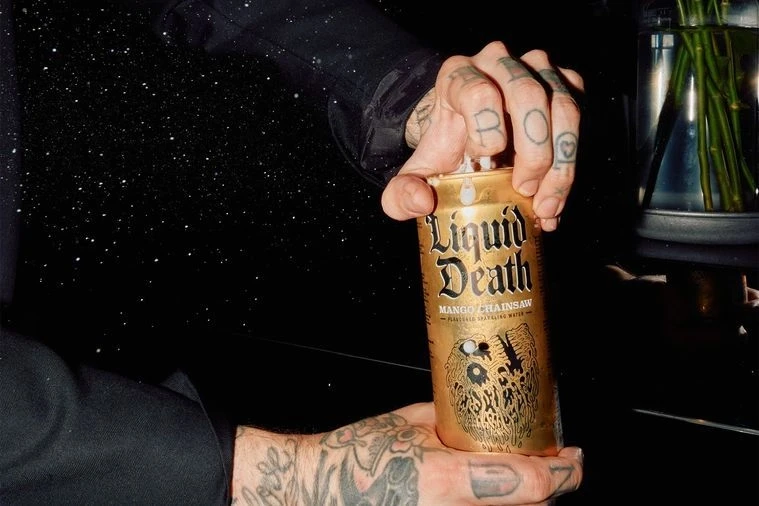
The pitch sounds like a joke. A company that sells water, mountain water specifically, in tallboy aluminum cans designed to look like beer, with a skull on the label, a tagline that says "Murder Your Thirst," and a marketing strategy built around heavy metal aesthetics, celebrity partnerships, and a level of irreverence that most consumer brands would consider career-ending. The company is called Liquid Death. It is worth $1.4 billion.
The joke, it turns out, is on everyone who dismissed it.
"The most absurd brand in beverage history has become one of its most successful. The joke is on everyone who dismissed it."
Liquid Death was founded in 2019 by Mike Cessario, a former Netflix creative director who had spent years working in advertising and entertainment. Cessario's insight was simple and, in retrospect, obvious: the beverage industry had a branding problem. Water brands were either clinical and corporate or aspirationally wellness-adjacent. Energy drinks had cornered the market on attitude. There was no brand that spoke to people who wanted to drink water but found the category boring.
Cessario decided to build one. He borrowed the visual language of heavy metal: the skulls, the aggressive typography, the black-and-silver color palette, and applied it to the most benign product imaginable. The result was a brand that felt genuinely different from anything else on a shelf, which is an extraordinarily difficult thing to achieve in a category as crowded as beverages.
The aluminum can is not incidental to Liquid Death's success. It is central to it. In a world where most water is sold in plastic bottles, the can is an immediate visual differentiator. It looks like a beer. It looks like an energy drink. It does not look like water. That distinction matters enormously in social settings, at concerts, at parties, at sporting events, where what you're drinking is a visible signal about who you are.
The can also carries an environmental argument. Aluminum is infinitely recyclable in a way that plastic is not. Liquid Death has leaned into this positioning with characteristic aggression, running campaigns that mock plastic water bottles and positioning the brand as the environmentally responsible choice for people who don't want to be lectured about the environment.
It is a neat trick: making sustainability feel rebellious rather than virtuous. The brand's tagline for its environmental messaging, "Death to Plastic," fits seamlessly with the overall aesthetic while communicating a genuine product advantage.
Liquid Death's marketing is the most discussed aspect of the brand, and for good reason. The company has produced content that includes a fake horror movie, a children's coloring book filled with adult themes, a heavy metal album recorded by actual musicians, and a series of advertisements so strange that they function more as art projects than commercial messages. The brand has partnered with Tony Hawk, Martha Stewart, and Travis Barker, among others, a roster that makes no obvious sense and perfect brand sense simultaneously.
"The brand has partnered with Tony Hawk, Martha Stewart, and Travis Barker. A roster that makes no obvious sense and perfect brand sense simultaneously."
The strategy reflects Cessario's background in entertainment. He has said repeatedly that Liquid Death is not a water company that does marketing. It is an entertainment company that sells water. The distinction is not semantic. It shapes every decision the brand makes, from the products it launches to the collaborations it pursues to the way it responds to criticism on social media.
When critics pointed out that the brand's edgy aesthetic was at odds with its wholesome product, Liquid Death leaned into the absurdity rather than defending itself. When a competitor tried to sue the company over its marketing, Liquid Death turned the lawsuit into a marketing campaign. The brand's willingness to treat every challenge as creative material has become one of its most distinctive characteristics.
Liquid Death's valuation of $1.4 billion, achieved in a 2023 funding round, raised eyebrows across the beverage industry. The company sells water. Water is a commodity. The margins on water are thin. The competition is enormous. How does a water brand justify a billion-dollar valuation?
The answer lies in distribution and brand equity. Liquid Death has achieved retail placement in Whole Foods, Target, Walmart, and thousands of other outlets. It has expanded beyond still water into sparkling water and flavored sparkling water. It has built a merchandise business, selling branded clothing, accessories, and limited-edition collaborations, that generates revenue independent of the beverage itself. And it has built a social media following that most consumer brands would trade significant resources to acquire.
The brand has also demonstrated something that investors find genuinely valuable: the ability to command a price premium in a commodity category. Liquid Death costs more than most water. People pay it. That willingness to pay is a function of brand identity, and brand identity is what Cessario has spent five years building with extraordinary precision.
The deeper lesson of Liquid Death is not about water or heavy metal or aluminum cans. It is about the relationship between brand identity and product category. Cessario identified a gap, a category that had no attitude, and filled it with maximum attitude. The product itself was almost irrelevant to the initial proposition. What mattered was the feeling the brand created.
That lesson applies far beyond beverages. In almost every consumer category, there are products that are functionally identical but emotionally differentiated. The brands that win are not always the ones with the best products. They are the ones with the clearest sense of who they are and the courage to commit to it completely, even when that identity seems absurd.
Liquid Death committed completely. The market rewarded it with a billion-dollar valuation and a devoted following that treats a can of water like a cultural artifact. In the history of consumer branding, that is genuinely remarkable.
About the author
Christie BellinoChristie Bellino is a brand strategist, concept developer, and hospitality industry veteran with deep expertise across food and beverage, restaurant development, and consumer packaged goods. She covers food and beverage innovation, restaurant concepts, CPG brands, and the entrepreneurs redefining how people eat, drink, and experience culture.

