
Industry Icons
The 2026 List Is Out. Meet 100 Industry Icons Earning Recognition.
Liz Plummer7 min read
Games, trading cards and licensing have created a franchise that earns across every stage of life

Business Contributor
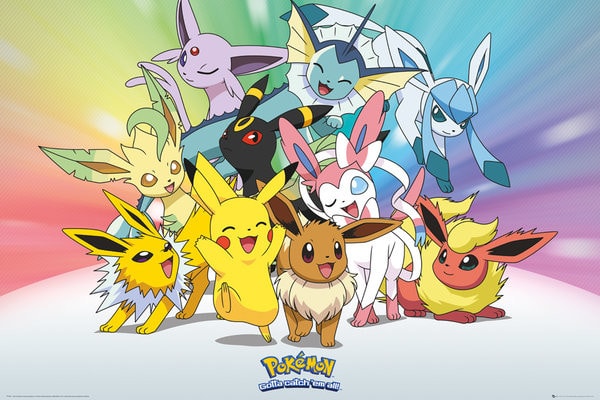
In 2023, Tiffany & Co. put Pikachu in 18-karat gold, added diamonds and placed the pendant inside a Tiffany Blue Poké Ball. The collaboration with artist Daniel Arsham made a persuasive business argument without saying a word: a childhood favorite can follow its audience into a very different tax bracket.
For Pokémon, that relationship has become enormously valuable. A fan can discover a character through a video game, collect its cards, buy something bearing its image and introduce it to their children. Each purchase draws on an attachment that may have begun years earlier.
Pokémon has built a business around selling new experiences to people who already care about its characters. Its financial advantage is the ability to carry that attachment from one product, and one stage of life, to the next.
Those relationships help explain why there is no single cash register collecting everything spent on Pokémon. A game purchase, a licensed necklace and a card bought from another collector involve different companies and different kinds of income.
The Japanese company's statutory accounts reported revenue of ¥531.4 billion and net profit of ¥120.1 billion for the year ended February 28, 2026. Revenue increased 29.3 percent from the previous year. Games industry analyst Serkan Toto put the sales figure at roughly $3.3 billion using the exchange rate in his June report. These accounts offer one view of a much wider commercial network.
A separate measure captures spending farther along the supply chain. License Global's 2026 ranking estimated $15.7 billion in retail sales of licensed consumer products for The Pokémon Company International during 2025, placing it sixth among the licensors in the report.
That $15.7 billion measures retail activity. The royalties received by a rights holder are only part of the economics of a licensed product; manufacturers, distributors and retailers have their own costs and shares of the proceeds. Adding retail spending to company revenue can count stages of the same commercial activity twice.
The trading card game gives Pokémon several reasons to remain relevant between video game releases. Players need cards for their decks. Collectors may want a particular illustrator's work or a different version of a favorite character. The company describes both competitive play and collecting as central to the product.
A card can have value to someone who never intends to play a match. A new illustration can make a familiar character desirable again without requiring Pokémon to introduce an entirely new fictional world.
The money also travels beyond the original sale. Consider a collector who buys a pack, pays to have a card authenticated and graded, then resells it through a marketplace. The transaction can produce income for a retailer, a grading service and a resale platform at different points. The seller receives the resale proceeds after applicable fees.
At the extreme end, Logan Paul's Pikachu Illustrator auction lot sold through Goldin in February 2026 for $16.492 million including the buyer's premium. The lot included the exceptionally rare, PSA Gem Mint 10 card, a diamond necklace and personal delivery. It was an extraordinary sale of a collectible package, with proceeds going through a resale transaction. The Pokémon Company had not just sold $16.492 million of new cards.
For the brand, the indirect benefit is attention. A desirable card gives people something to discuss, search for and show one another. The risk is that the prospect of making money begins to overwhelm the pleasure of collecting.
There is a practical conflict here. A reseller holding scarce inventory may benefit from a shortage. Pokémon needs enough accessible product to keep welcoming customers. A child who cannot find cards at a reasonable price is a potential future fan being turned away.
The company is also investing in how products reach stores. In February 2026, The Pokémon Company International announced an agreement to acquire Excell Brands, its largest U.S. distribution partner. Distribution capacity belongs in this story alongside character design. A brand cannot build its next generation of collectors on empty shelves.
Licensing gives Pokémon access to spending that would never appear in a video game sales chart.
Under a licensing arrangement, another business gets permission to use the brand within agreed terms. That partner brings its manufacturing skills, distribution and customers. The rights holder earns the compensation specified by the agreement. Pokémon can enter a category without having to build every factory or master every product itself.
The Tiffany collaboration shows how far that model can stretch. A familiar character becomes part of a luxury purchase, carrying a personal meaning that precious metal alone cannot supply. The appeal can survive even when the buyer has stopped playing the games.
At another stage of life, Pokémon's monpoké range brings the characters into products for babies and young children. The company explicitly describes the brand as a way to connect with people who grew up enjoying Pokémon and are now parents.
Growing older creates new purchasing occasions. Someone who once wanted a game may later want a gift for a baby, a collectible for a shelf or a piece of jewelry. Pokémon has products available for each of those moments.
A partnership can also introduce the brand to a customer who has never bought a Pokémon game. Merchandise becomes another route into the franchise, giving the company more opportunities to begin a relationship.
Video games remain foundational. Beyond the revenue from each title, they give players places to explore and creatures to care about. Those experiences help explain why an image on a card or a piece of clothing can be worth something to its buyer.
Mobile games add a different commercial rhythm. A console game can be a substantial purchase followed by hours of play. A phone app can become a brief daily habit, with repeated opportunities to spend.
The value of an enduring mobile audience was visible in Scopely's $3.5 billion acquisition of Niantic's games business, completed in May 2025. Pokémon GO was part of the deal, alongside Pikmin Bloom, Monster Hunter Now and related services. Scopely said the acquired business generated more than $1 billion in revenue during 2024.
Those figures cover the acquired portfolio. They are neither a standalone valuation of Pokémon GO nor a purchase price for the Pokémon franchise. They do, however, show how much a buyer was prepared to pay for businesses built around communities that keep returning.
Someone may lose interest in a particular game while remaining attached to a character. A collector may skip one expansion and return for the artwork in another. A parent may rediscover the franchise through a child. The relationship can survive a pause in purchasing because it has more than one point of connection.
There is an advantage here for the next product. A company introducing an unfamiliar character must first give people a reason to care. Pokémon can introduce something new through characters and memories its customers already recognize. That familiarity does not guarantee a sale, but it gives the product a place to begin.
For Pokémon, the difficult judgment is how much spending to encourage without exhausting the relationship that makes the spending possible. More products and more opportunities to pay can increase sales. They can also make participation feel like an obligation.
The gold Pikachu is an extravagant expression of a familiar attachment. Pokémon's future depends on keeping that attachment within reach of the child buying a first pack as well as the adult buying the pendant.
About the author
Paco BlancoPaco Blanco covers business strategy, brand economics, and the companies shaping modern industry.