

Innovation
The Everything App for Work: How Notion Became the Operating System for Modern Teams
Paco Blanco8 min read
As President and CEO of The Tetris Company, Maya Rogers is proving that the strongest legacy brands do not simply preserve nostalgia. They create new reasons to matter.

Arts & Business Contributor

Few brands in the world enjoy the kind of recognition that Tetris does. For more than four decades, the simple act of rotating geometric blocks has transcended generations, cultures, languages, and technology platforms. It is one of the rare entertainment properties that grandparents, parents, and children have all experienced in different ways.
Explore more: The Tetris Company
Many legacy brands struggle with a familiar problem: nostalgia is powerful, but it rarely guarantees future growth. Maya Rogers approached Tetris differently. Rather than preserving the brand in amber, she expanded what people believe Tetris can be.
"Most companies spend decades trying to create a recognizable brand. Tetris already had one. The challenge became ensuring that each new generation discovered it in an entirely new way."
It is tempting to think innovation always requires starting from scratch. Maya Rogers proves the opposite. Some of the strongest businesses are not built by inventing something new. They are built by protecting what made something timeless while carefully expanding its relevance.
Perhaps the clearest example of Maya Rogers' vision came with Tetris' groundbreaking partnership with Red Bull. Rather than simply sponsoring another esports tournament, the collaboration transformed one of the world's most recognizable puzzle games into a global live entertainment experience.
The Red Bull Tetris World Finals culminated at Dubai Frame, where finalists from more than 55 countries competed while thousands of drones created the first official live, playable Tetris game in the sky. It was an ambitious blend of gaming, architecture, technology, and spectacle that reimagined what a legacy entertainment brand could become.
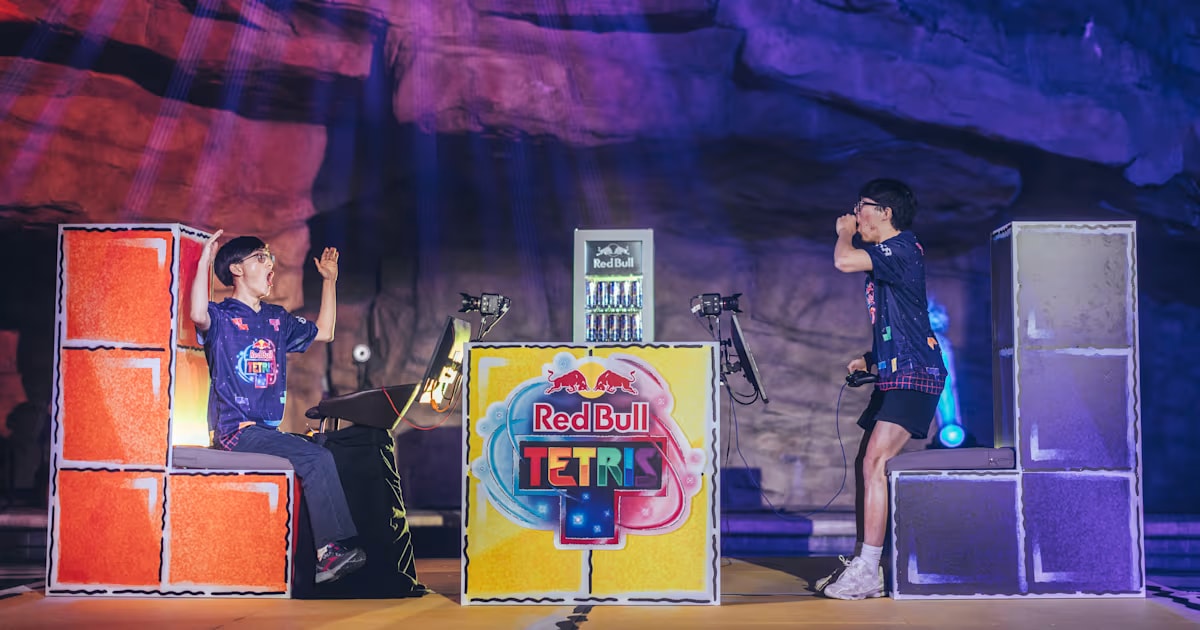
The event was not just impressive because of its scale. It demonstrated a broader business strategy. Today's most valuable brands do not simply sell products. They create experiences people want to share.
For Rogers, the partnership represented far more than a marketing campaign. It reinforced her long-term vision of Tetris as a cultural brand that extends well beyond consoles and mobile devices into live events, entertainment, licensing, and global experiences that introduce the game to entirely new audiences.
That philosophy has become a defining characteristic of her leadership. Instead of relying solely on nostalgia, Rogers continues to find new ways for audiences to interact with a brand they have known for decades, proving that innovation does not always require changing the product. Sometimes it simply means changing the stage.
Rogers' influence extends well beyond the video game industry. She is also a founding partner of Blue Startups, Hawaii's first venture accelerator, helping entrepreneurs launch and scale early-stage companies through mentorship, investment, and community. The accelerator has helped founders secure hundreds of millions of dollars in follow-on funding while strengthening Hawaii's growing innovation ecosystem.
The connection makes sense. Building companies and building brands require many of the same instincts: recognize potential, protect what matters, and know when to evolve.
Some CEOs become synonymous with constant headlines. Others quietly build institutions that outlast product cycles. Maya Rogers belongs firmly in the second category. Raised between Japan and the United States in a multicultural entrepreneurial family, she inherited more than a famous brand. She inherited the responsibility of protecting one of the world's most beloved pieces of intellectual property while preparing it for an entirely different generation of consumers.
It is a balancing act that many legacy companies never successfully achieve.
In business, longevity is often confused with age. But brands do not survive because they are old. They survive because someone continues finding new reasons for people to care.
When thousands of drones lit up the Dubai skyline in the shape of falling Tetriminos during the Red Bull Tetris World Finals, it was not simply another gaming event. It was proof that one of the world's oldest video game brands could still surprise the world.
"She has not changed what Tetris is. She has expanded what it can become."
And in an era when brands are constantly searching for relevance, that may be the most valuable move of all.
About the author
Tamara EdwardsTamara Edwards is an Arts & Business Contributor for Industry and Influence.