
Consumer Trends
The New Cocktail Has THC in It. Restaurants Are Trying to Figure Out What Happens Next.
Liz Plummer11 min read
The Skywalker Grill at the Lucas Museum of Narrative Art isn't just a place to eat between galleries. It's a statement about what happens when storytelling extends all the way to the plate.

Contributing Writer
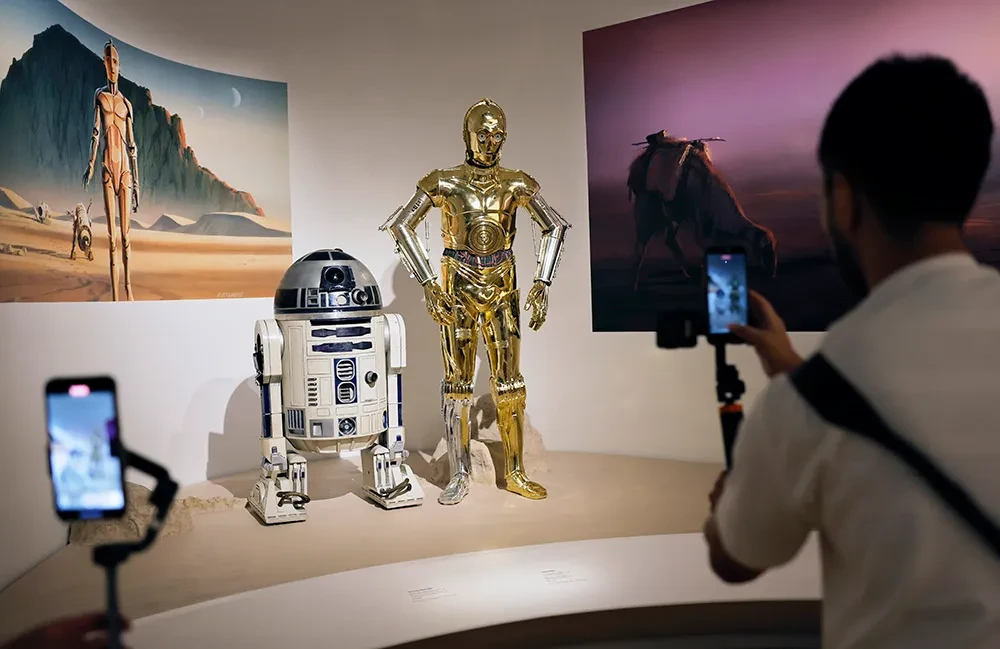
On September 22, 2026, one of the most anticipated cultural openings in Los Angeles history finally happens. The Lucas Museum of Narrative Art, a decade in the making, a billion dollars in the building, and a vision that George Lucas has been refining since long before the first shovel hit the ground, opens its doors to the public at One Lucas Plaza in Exposition Park.
But before the art world descends on the galleries, before the lines form around the sculptural curves of Ma Yansong's landmark building, before the first visitor stands inside a collection that spans Norman Rockwell originals, Star Wars concept art, and centuries of illustrated storytelling, there is a conversation already happening in Los Angeles food circles about what's waiting on the other side of the entrance: the Skywalker Grill.
The story of the Lucas Museum is, in many ways, a story about persistence. George Lucas first proposed a museum dedicated to narrative art, the kind of visual storytelling that lives in film, illustration, comics, and popular culture, in San Francisco in the early 2000s. The project moved to Chicago, where it spent years in planning before community opposition over the lakefront site killed it. It finally found its home in Los Angeles, on a 11-acre site adjacent to the Los Angeles Memorial Coliseum and the Natural History Museum, in a neighborhood that has long been underserved by the kind of cultural investment that flows more easily to Westside institutions.
The building itself is extraordinary. Designed by Chinese architect Ma Yansong of MAD Architects, the firm behind some of the most visually striking public buildings of the past decade, the structure rises from the ground in organic, flowing forms that deliberately resist the boxy conventions of institutional architecture. The landscape surrounding it was designed by Mia Lehrer, transforming what was once a surface parking lot into a public park with gardens, water features, and open space that the museum has committed to keeping free and accessible to the community.
The collection inside is equally ambitious. Lucas has spent decades assembling what is now one of the most significant private collections of narrative art in the world, more than 10,000 works spanning original paintings by Norman Rockwell and J.C. Leyendecker, concept art and production materials from the Star Wars and Indiana Jones franchises, original comic art, film posters, and works that trace the history of visual storytelling from the 19th century to the present. The museum's stated mission is to explore how narrative art shapes culture, how the images we grow up with, the stories we absorb through illustration and film, form the way we understand the world.
Museum dining has a complicated reputation. For most of the 20th century, the institutional cafeteria was a necessary inconvenience, a place to refuel between galleries, not a destination in its own right. That began to change in the 1990s and 2000s as major institutions started treating their restaurants as extensions of the visitor experience, not afterthoughts. The Modern at MoMA in New York, the restaurant at the Art Institute of Chicago, the Canteen at the Tate Modern in London, these spaces signaled that a museum meal could be as considered as the art on the walls.
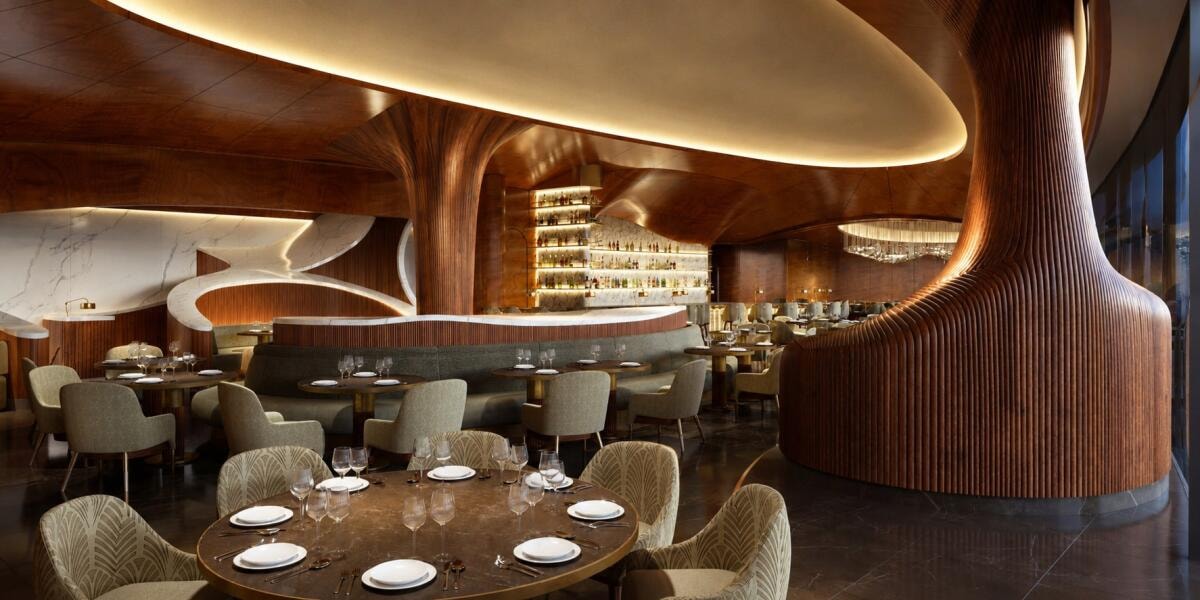
The Skywalker Grill is positioned to take that idea further. Named, like so much of the Lucas universe, with a nod to the mythology George Lucas has spent his career building, the restaurant occupies a prime position within the museum's ground floor, with views out to Mia Lehrer's landscape and the Exposition Park grounds beyond. The design language carries the same organic, flowing sensibility as the building itself: warm materials, considered lighting, a space that feels cinematic without being theatrical.
"The best museum restaurants understand that the meal is part of the visit, not a pause in it. The Skywalker Grill is designed to extend the experience of the museum, not interrupt it."
The menu draws on California's extraordinary produce culture, the kind of ingredient-forward, seasonally driven cooking that has defined the best of Los Angeles dining for the past two decades. Expect dishes that reflect the diversity of the city: influences from across Latin America, Asia, and the Mediterranean, grounded in the farmers market sensibility that has made Southern California one of the most exciting food regions in the country. The grill format itself, open-fire cooking, char and smoke as flavor tools, gives the kitchen a directness that suits the museum's populist, accessible spirit. This is not white-tablecloth dining designed to intimidate. It is serious food made approachable.
The Lucas Museum is opening in Exposition Park, a neighborhood in South Los Angeles that has historically been overlooked by the kind of cultural and economic investment that flows to more affluent parts of the city. The Natural History Museum is there. The California Science Center is there. The Coliseum is there. But the density of world-class cultural institutions that defines neighborhoods like Westwood or downtown has never fully materialized in Exposition Park, despite the neighborhood's deep roots and the significance of what already exists there.
The Lucas Museum's arrival changes that calculus. A billion-dollar institution with a world-class collection, a landmark building, free public grounds, and a restaurant that is already generating serious culinary conversation, that is a different kind of anchor than the city has seen in this part of Los Angeles in a long time. The museum has been explicit about its commitment to the surrounding community: free admission programs, educational partnerships with local schools, and a public park that belongs to the neighborhood, not just to ticket holders.
The Skywalker Grill is part of that story too. A restaurant that draws visitors from across the city, and eventually from around the world, into Exposition Park creates foot traffic, economic activity, and visibility for a neighborhood that has long deserved more of all three. The best cultural institutions understand that their impact extends past their walls. The Lucas Museum, from everything visible in its design and its stated mission, seems to understand that.
Los Angeles has always had a complicated relationship with its own cultural identity. It is the entertainment capital of the world, the city where more of the 20th century's defining visual stories were made than anywhere else on earth, and yet it has historically undersold itself as a city of serious culture, deferring to New York and London and Paris in the way cities sometimes defer to older siblings.
The Lucas Museum of Narrative Art is a direct argument against that deference. It is a museum built around the idea that popular culture, film, illustration, comics, the images that actually reach people, is as worthy of serious institutional attention as the fine art that fills more traditional collections. That is a Los Angeles argument. It is an argument that could only be made convincingly here, in the city where so much of that popular culture was created.
George Lucas spent decades trying to build this museum. He fought city councils and community boards and the kind of institutional inertia that kills ambitious projects before they begin. He funded it himself, an estimated $1 billion of his own money, rather than wait for public funding that might never come with the strings he was willing to accept. The result is a building that belongs to Los Angeles in a way that few privately funded institutions ever do: genuinely public in its access, genuinely ambitious in its vision, genuinely rooted in the neighborhood it chose.
The Lucas Museum of Narrative Art opens to the public on September 22, 2026. It is located at One Lucas Plaza, Los Angeles, CA 90037, in Exposition Park, easily accessible by Metro (Expo Line, Exposition Park station) and with parking available on site. Hours are Monday and Wednesday through Friday, 10 AM to 5 PM; Saturday 9 AM to 9 PM; Sunday 9 AM to 5 PM. The museum is closed Tuesdays and on Thanksgiving, Christmas, and New Year's Day.
The Skywalker Grill is open to both museum visitors and the general public. Reservations are expected to be in high demand in the weeks following opening, the combination of a landmark new institution, a genuinely exciting dining concept, and a city that has been waiting for this opening for years is a recipe for a full house. Plan accordingly.
"This is not just a museum opening. It is a statement about what Los Angeles believes about its own culture, and what it is willing to build to prove it."
The Lucas Museum of Narrative Art is the kind of institution that cities spend generations hoping for and rarely get. The Skywalker Grill is the kind of restaurant that reminds you that the best dining experiences are never really just about the food. Both open September 22. Both are worth your time.
About the author
Tamara EdwardsTamara Edwards writes about innovation, culture, and the people building what comes next.