

Innovation
They Used to Sign Deals. Now They Sign Checks.
Liz Plummer9 min read
Tara Keeney built Look Who I Found with a $10 microphone and a simple idea: take the founder off the stage and onto the street. Ten million monthly views later, she might have cracked the format everyone else is still trying to figure out.

Business & Culture Contributor
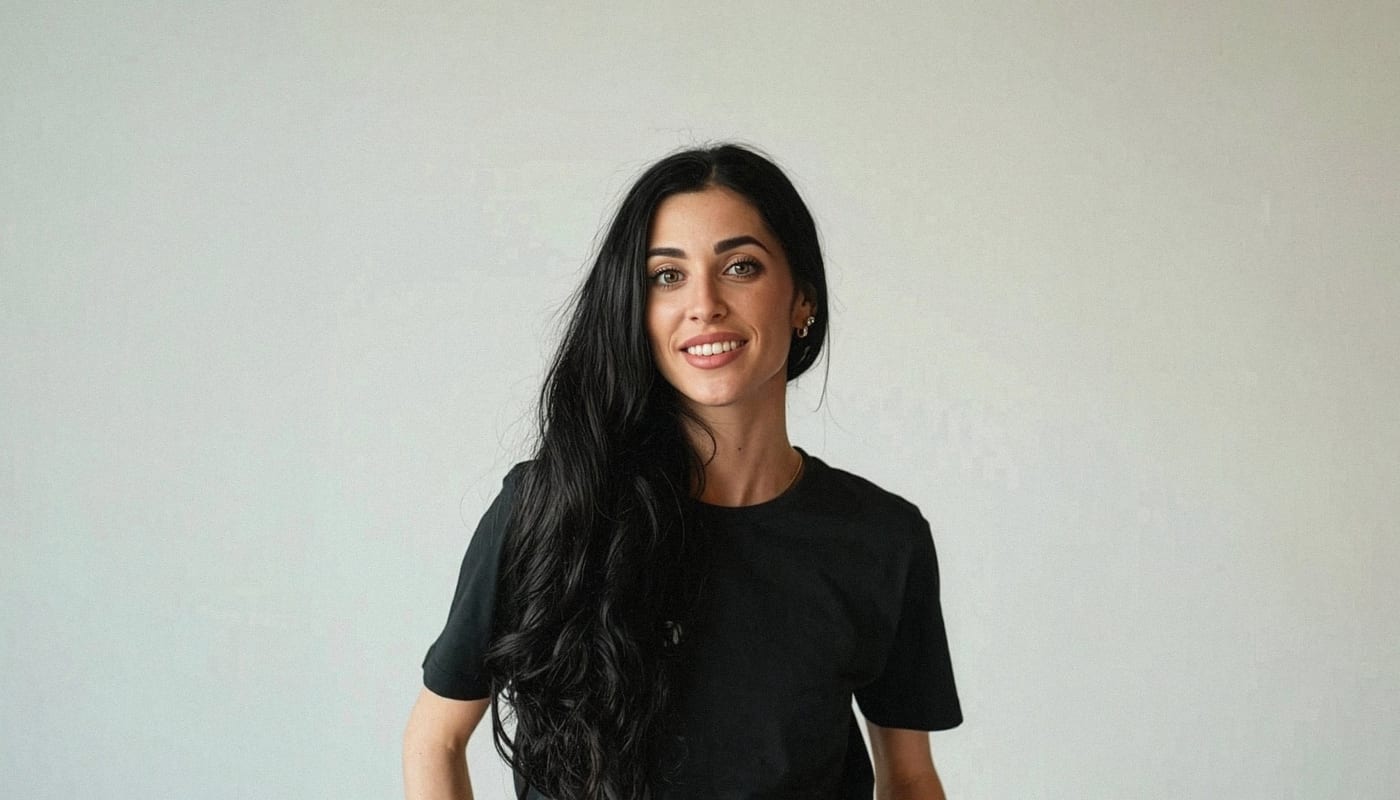
The setup is almost aggressively simple. Tara Keeney shows up, asks a founder to go for a walk, and presses record. No studio. No ring light. No teleprompter. No pre-approved question list. Just two people moving through a city, talking about how they built something from nothing, while the camera catches whatever happens.
That is the entire format of Look Who I Found, the creator-led interview series Keeney has built into one of the more quietly influential media properties in the entrepreneurship space. Over a hundred founder conversations filmed. Ten million monthly views. A hundred and fifty thousand followers and growing. Guests who have included the founders of Netflix, Airbnb, Duolingo, Waze, SoulCycle, Soho House, and Blank Street Coffee, alongside names like Gary Vaynerchuk, Elle McPherson, and Ryan Serhant.
She started with a ten-dollar microphone. That detail is not a metaphor. It is a fact she has shared publicly, and it matters because it is the clearest possible statement of what the format is actually about: the idea is the asset, not the production budget.
"Entrepreneurship should be for everyone. But right now it doesn't feel that way. The founders building the world's biggest companies seem untouchable. I'm changing that."
There is a body of research on what happens to conversation when people walk side by side rather than sitting across from each other. The removal of direct eye contact reduces social threat. The shared forward motion creates a sense of collaboration rather than interrogation. People say things on a walk that they would not say in a chair. Therapists have known this for decades. Keeney figured it out with a camera.
The walking interview is not a new invention. Journalists have used the format informally for years. But as a deliberate, repeatable, branded content format built for short-form video, Keeney has developed something that feels genuinely distinct from the landscape of founder media that surrounds it. The typical founder interview is a performance. The subject sits in a well-lit room, delivers polished answers to questions they have answered before, and leaves having said nothing they did not intend to say. The walking format breaks that pattern because the body is doing something else. The guard comes down.
Watch a few Look Who I Found episodes back to back and the difference becomes clear. Founders laugh at things they would not laugh at on a stage. They trail off mid-sentence and say something honest instead of something quotable. They point at things. They get distracted. The footage looks like a conversation because it is one, and that quality is almost impossible to fake in a studio setting no matter how much money you spend on lighting.
Keeney has been explicit about what she is trying to do. The stated mission of Look Who I Found is to make every person who watches feel one thing: if they can do it, so can I. That is a specific and meaningful editorial position, and it shapes everything about how the interviews are conducted and edited.
The founder media landscape is dominated by two modes. The first is the hagiographic profile, in which a successful person is presented as a genius whose success was inevitable. The second is the tactical breakdown, in which a successful person explains the specific frameworks and systems that produced their results. Both modes are useful. Neither is particularly human. Keeney is doing something different: she is presenting founders as people who had an idea and refused to quit, which is both more accurate and more accessible than either of the dominant alternatives.
The guest list reflects this. Keeney has walked with the founders of companies that most people use every day, but she has also walked with founders who are earlier in their journeys, less famous, and more representative of what building actually looks like before the success story gets written. The mix is deliberate. It signals that the show is not a trophy case for the already-arrived. It is a document of the process.

Look Who I Found is a media business, and Keeney has built it with the same intentionality she brings to the editorial side. The site lists three distinct revenue streams: brand partnerships and ambassador relationships, sponsored content creation, and paid founder features in which a subject pays to be included in the walking interview format with professional video production and cross-platform distribution.
The paid founder feature model is worth examining because it sits in a complicated space. Editorial media has traditionally maintained a strict separation between paid placement and editorial coverage. Creator media has largely abandoned that separation, with most creators treating sponsored content as indistinguishable from organic content. Keeney's model is transparent about the commercial relationship while maintaining the format's authenticity, which is a harder balance to strike than it sounds.
The reason it works is that the format itself is the quality control. A walking interview with a founder who has nothing interesting to say is still a walking interview with a founder who has nothing interesting to say. The production cannot save a bad conversation, which means the incentive to find genuinely compelling subjects is built into the economics. A paid feature that produces a dull video is bad for the brand regardless of what the founder paid.
"My mission is simple: to make every single person who watches feel one thing. If they can do it, so can I."
Ten million monthly views is a number that requires some context. In the creator economy, view counts are often cited without reference to the platform, the content type, or the audience quality. A viral clip of a dog doing something funny gets ten million views. A detailed conversation about how a founder navigated a near-death moment for their company gets ten million views. These are not the same ten million views.
The Look Who I Found audience skews toward people who are actively building something or seriously considering it. That is a high-intent audience in the language of media buyers, which is why the brand partnership model works. A company that wants to reach founders and aspiring entrepreneurs does not need to reach everyone. It needs to reach the right people, and Keeney has built a channel that delivers them at scale.
The Forbes coverage, which noted the Oprah connection in its headline, signals that the mainstream media establishment has started to take notice. That kind of coverage is a milestone for a creator-led property because it changes the conversation from "interesting niche channel" to "legitimate media brand." It also changes the inbound. Founders who might not have responded to a cold outreach from a creator with 150,000 followers will respond to a creator who has been covered in Forbes.
There is something worth naming about what the walking interview format says about the moment we are in. The dominant media formats of the last decade have been optimized for production value, for polish, for the kind of visual quality that signals seriousness and investment. The podcast studio with the acoustic panels. The YouTube set with the branded backdrop. The conference stage with the professional lighting rig. These formats communicate authority through production.
The walking interview communicates authority through access. The implicit message is not "we have a nice studio." It is "this person agreed to go for a walk with me and say real things." That is a different kind of credibility, and it is one that audiences have become increasingly attuned to as the gap between produced authenticity and actual authenticity has become more visible.
The creator economy has spent years trying to manufacture the feeling of authenticity through increasingly sophisticated production. Keeney went the other direction. She stripped the production down to its minimum viable form and let the conversation carry the weight. The result is a format that feels more honest than most of what surrounds it, which turns out to be exactly what a large and growing audience was looking for.
Keeney is at an interesting inflection point. The numbers are strong enough to attract serious brand partners and high-profile guests, but the operation is still small enough that she is personally accessible and actively building. She has a direct partnership email on her site. She is speaking at events. She is looking for collaborations that align with the brand.
For media brands, publications, and anyone building in the entrepreneurship space, she represents the kind of creator partnership that is genuinely valuable: an audience that is engaged, a format that is distinctive, and a founder who is still in the phase of her career where the right collaboration can be meaningful to both sides.
The ten-dollar microphone is long gone. But the instinct that drove her to pick it up in the first place, the belief that the story matters more than the setup, is still the thing that makes Look Who I Found worth paying attention to. In a media landscape that keeps adding production layers, Tara Keeney keeps taking them away. So far, that bet is paying off.
About the author
Tamara EdwardsTamara Edwards covers the people and ideas reshaping how business gets built, told, and shared. She writes about founders, media, and the cultural forces that determine which stories actually get heard.