

Innovation
The Co-CEOs Steering Waymo Into the Future
Tamara Edwards9 min read
Chip Motors is making a case for a new kind of electric vehicle: one designed around the short, everyday trips that make up much of modern life.

Arts & Business Contributor

For decades, the American vehicle market has treated bigger as a default setting. More seats. More cargo room. More horsepower. More metal moving through a parking lot to pick up coffee, groceries, or a child from practice. The Miami-based startup believes that default is overdue for a rethink.
Chip Motors was built on a simple frustration: most daily trips do not need a 5,000-pound vehicle, but that is what most Americans are driving. The company was co-founded by Jameson Detweiler, Co-founder and CEO, and Ilan Penn, Co-founder, two entrepreneurs who believed the answer was not a better version of the existing car, but an entirely different category built around the way people actually move through their days.
Detweiler and Penn come from consumer products and brand building, not legacy automotive. That outside perspective is visible in how Chip is positioned: less like a vehicle manufacturer and more like a lifestyle company that happens to make a vehicle. They have been deliberate about the brand's personality, its customization options, and the way it communicates with a consumer audience that is used to products with a clear point of view.
Operating out of Miami, Detweiler and Penn have been building toward a production-ready vehicle designed for local roads, short trips, and the kind of everyday mobility that does not require highway range or a large footprint. Their thesis is straightforward: the next meaningful shift in personal transportation will not come from making cars faster or bigger. It will come from making them right-sized for the life most people are actually living.
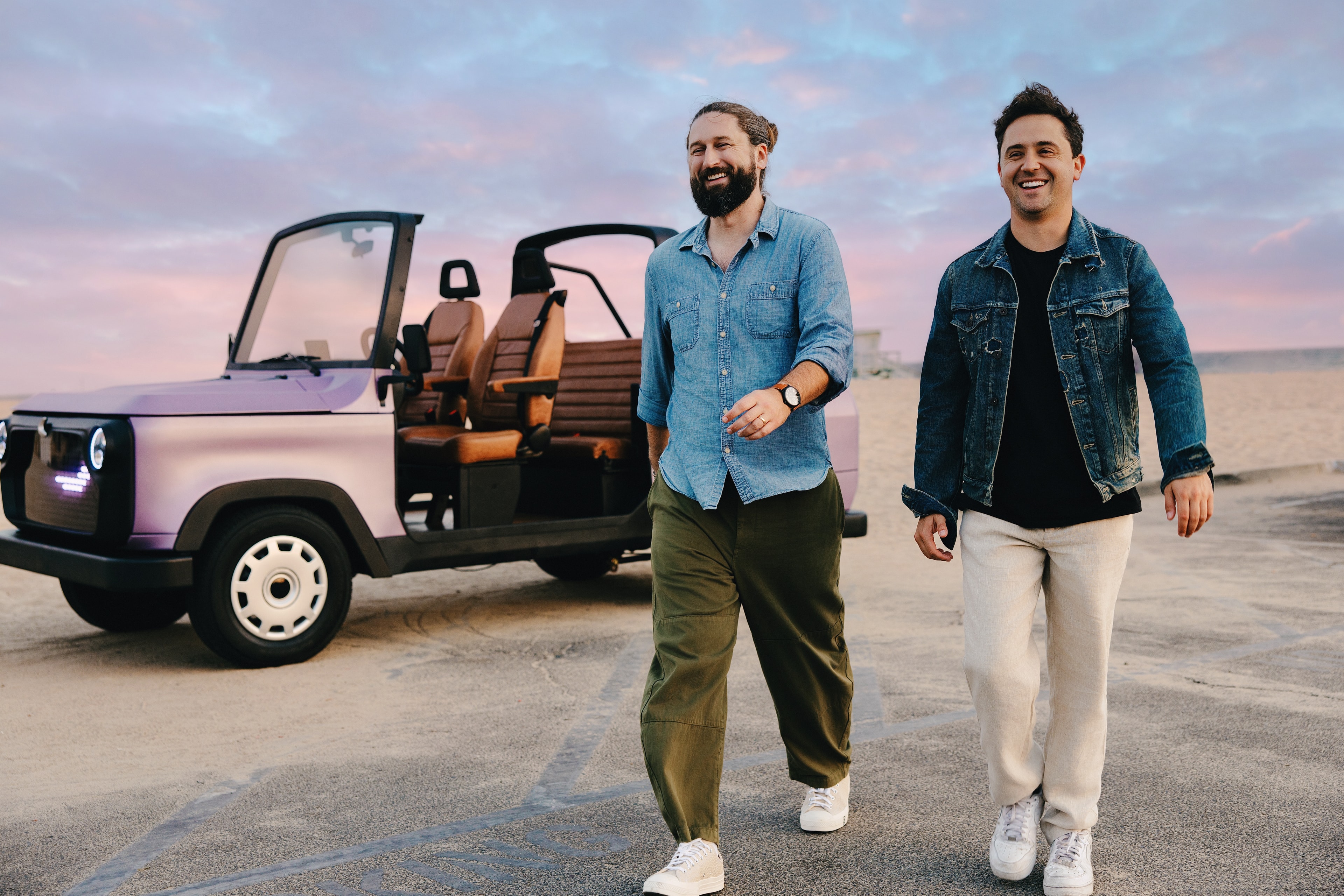
According to Chip Motors, the vehicle is street legal for roads with posted speed limits up to 35 mph, has a 25 mph top speed, seats four or six people depending on configuration, and is expected to travel more than 100 miles per charge. The company lists estimated starting prices of $15,000 for the four-seat model and $18,000 for the six-seat model.
Those specifications place Chip in a deliberately specific lane. It is not pitched as a highway machine or a replacement for every family vehicle. It is aimed at neighborhood errands, school drop-offs, beach trips, local dinners, and the kind of repeat travel that can feel oversized when done in a conventional SUV.
"The opportunity is not to make every trip possible. It is to make the trips people take most often feel simpler."
The most interesting part of Chip's pitch is not only its size. It is the company's focus on time. Chip Go!, the company's planned feature set, describes functions such as parking after passengers exit, returning when summoned, going home, and handling curbside pickup. These features are presented as future capabilities rather than a promise of fully autonomous driving everywhere.
That distinction matters. The autonomous-vehicle conversation has often centered on robotaxis and long-distance mobility. Chip is framing automation around smaller frictions: the parking hunt, the school line, the curbside pickup, and the moment a driver would rather be walking into dinner than circling the block.
Chip also leans into a consumer behavior that has become central to modern mobility: people want products that feel personal. The company says buyers will be able to configure colors, seating, roofs, doors, front storage, and accessories. That makes the vehicle feel closer to a lifestyle product than a generic appliance.
It is a smart position for a young brand. In categories crowded with technical claims, personality can be a differentiator. A vehicle that is visibly compact, open-air, and customizable has a chance to become recognizable before it becomes ubiquitous.
Chip's model will depend on the places where its constraints become strengths. Dense neighborhoods, resort communities, campuses, coastal towns, and suburban areas with lower-speed local roads are more natural fits than long commutes or highway-heavy regions. Local rules, charging access, weather, and road design will all shape how practical the vehicle is for any individual buyer.
But the broader idea is compelling because it is grounded in a familiar problem. Many daily trips are short. Many parking lots are frustrating. And many people are carrying far more vehicle than they need for the task at hand.
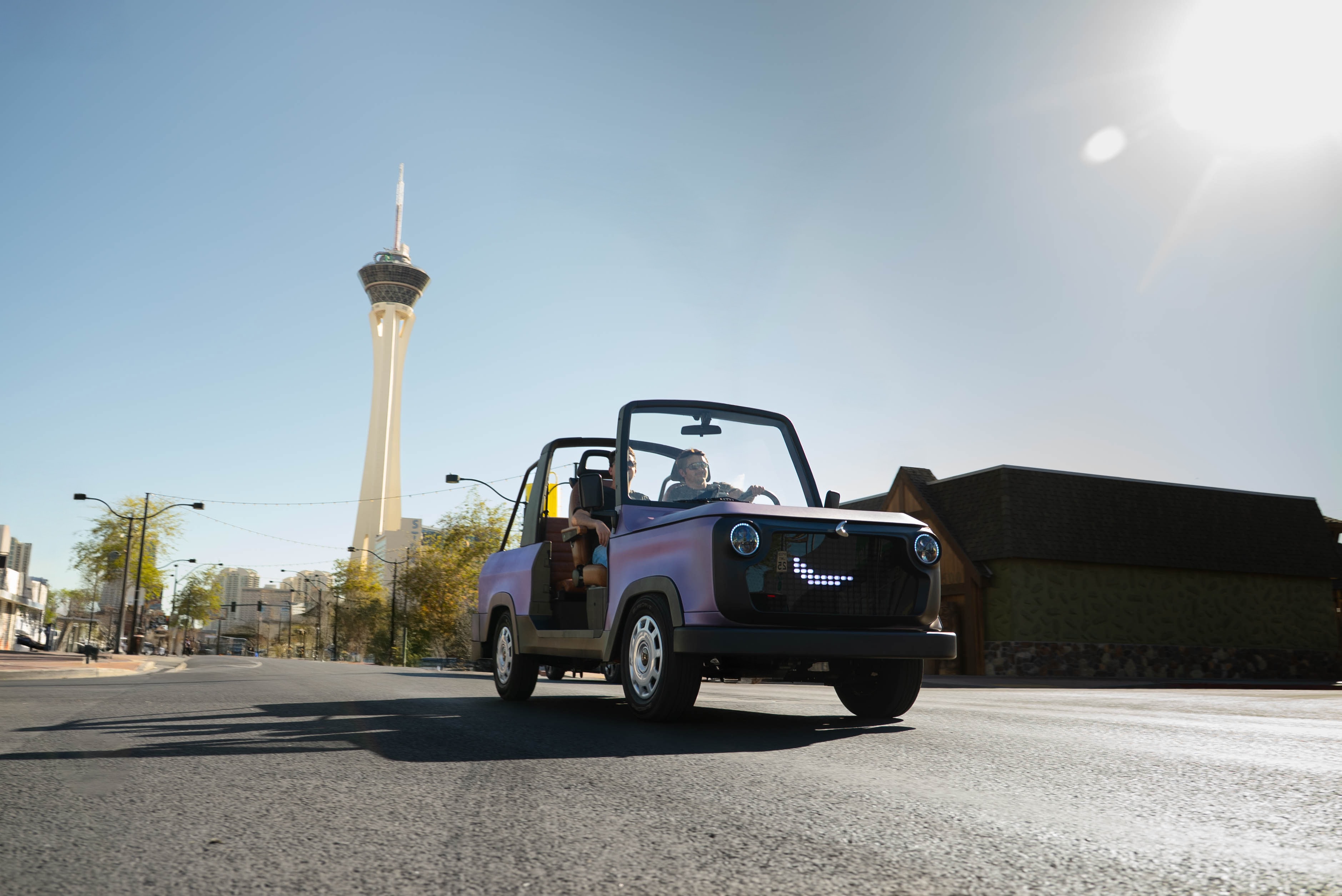
The rise of the SUV solved real problems for many households. It created room for people, gear, pets, and long weekends. But it also made one vehicle responsible for every possible scenario, including the ordinary five-mile trip where most of that capacity goes unused.
Chip is built around the idea that a household may not need one vehicle to do everything. A compact local vehicle can be useful precisely because it does less. It is intended for the errands, school runs, neighborhood visits, and short social trips that fill a calendar without requiring highway range or a large footprint.
That is a different consumer proposition from the usual electric-vehicle pitch. Instead of asking buyers to compare acceleration, battery size, or a long list of premium features, Chip asks a simpler question: what would make the most common trips easier?
A vehicle designed for local use has to earn its place in a different way. It needs to be easy to enter, easy to park, comfortable enough for passengers, and practical enough for bags, groceries, and the unpredictable extras that come with family life. Chip's four- and six-seat configurations acknowledge that local travel is often social travel.
The company's open-air positioning is also part of that equation. A short ride to dinner, the beach, a park, or a neighborhood event can feel less like a chore when the vehicle itself adds a sense of occasion. That does not make it the right answer for every climate or every commute. It does make the experience part of the product.
For Chip, the challenge will be translating that appeal into daily reliability. A vehicle can be charming on a sunny afternoon and still need to prove it works for the routine realities of ownership. The strongest local-mobility brands will be the ones that make the fun part feel dependable.
Chip Go! is the company's name for a set of planned convenience features: sending the vehicle to park, calling it back, sending it home, handling curbside pickup. The language is intentionally domestic and practical. It is about reclaiming minutes, not staging a science-fiction demonstration.
People do not necessarily need a vehicle to drive across the country without them. They may simply want to avoid walking through a crowded parking lot, circling a restaurant, or waiting in a pickup line. Those are modest problems, but they happen constantly. Automation becomes valuable when it removes a small, repeated annoyance from a person's day.
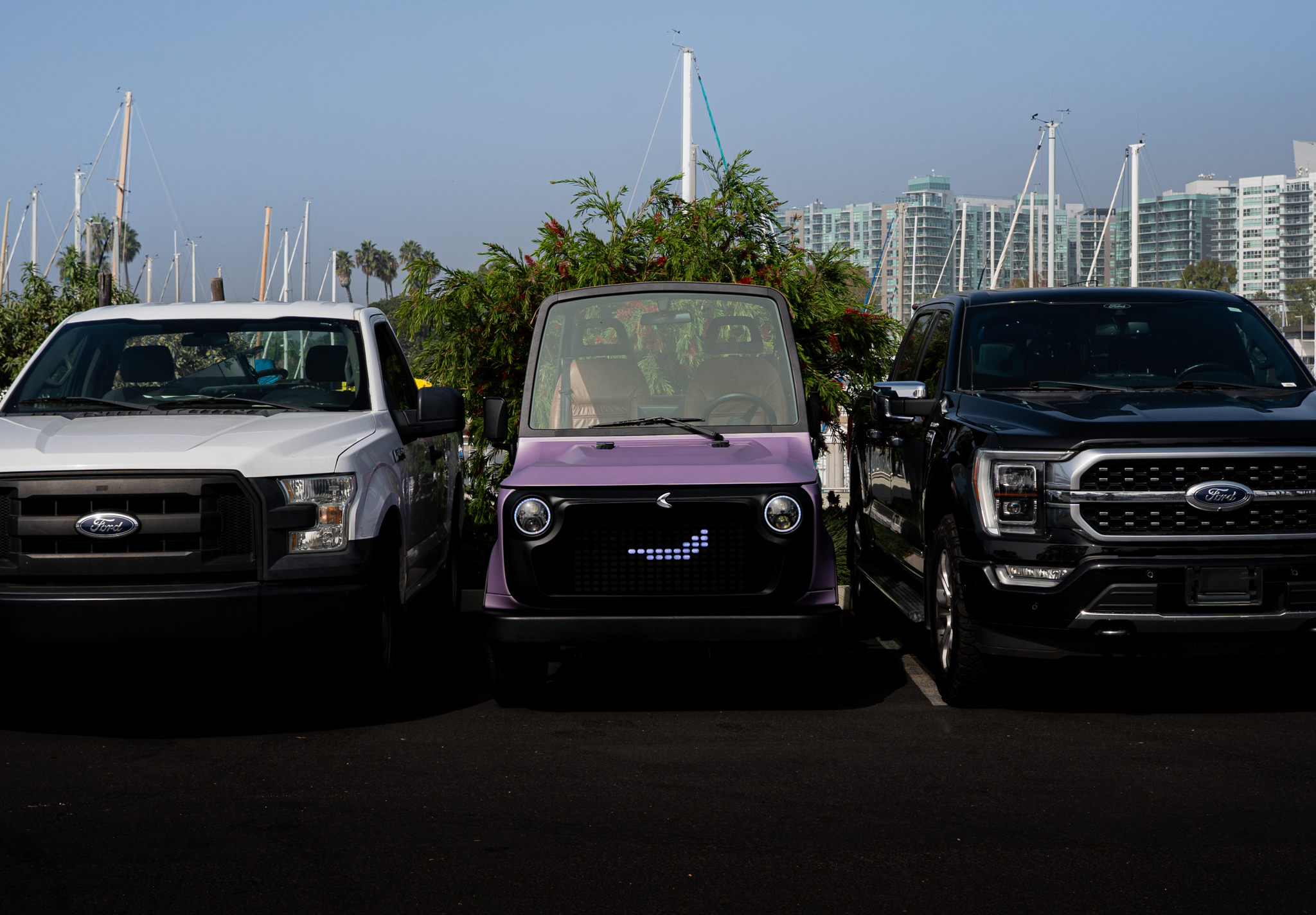
Chip puts customization closer to the center of the experience than most vehicle brands would dare. Color, seating, roof, doors, front storage, accessories, and the choices are designed to make the vehicle feel personal. A local vehicle is seen by neighbors, friends, and family as often as it is driven, and a product with a clear personality creates its own visibility. When people recognize it across a parking lot or ask about it at a stoplight, the brand has already done some of its marketing work.
The risk is confusing novelty with utility. Chip's design choices will matter most if they support the core promise: a compact, comfortable, useful way to move a small group through local life. Personality attracts attention. Practicality earns repeat use.
Chip's strongest early markets will be places where local trips are frequent, roads are slower, and parking is a recurring frustration: resort communities, coastal towns, campuses, and dense suburban areas where people travel short distances without needing highway range. That specificity is not a weakness. It is the point of the category.
Chip Motors is not asking consumers to abandon the car. It is asking them to reconsider the default one. Whether it becomes a meaningful new category will come down to execution: product quality, safety, service, and real-world reliability. But the company has identified a genuine opening. The future of mobility may not always be faster, larger, or more complicated. Sometimes it may simply be right-sized.
About the author
Liz PlummerLiz Plummer is a writer and editor covering innovation, consumer culture, and the entrepreneurs building the next wave of businesses.