Creative Profiles
Kehinde Wiley: The Painter Who Rewrote Art History
Liz Plummer8 min read
She has built stages for Beyonce, Adele, Kanye West, and the Super Bowl. But Es Devlin is not really in the concert business. She is in the business of making people feel something they cannot find anywhere else.

Arts & Business Contributor
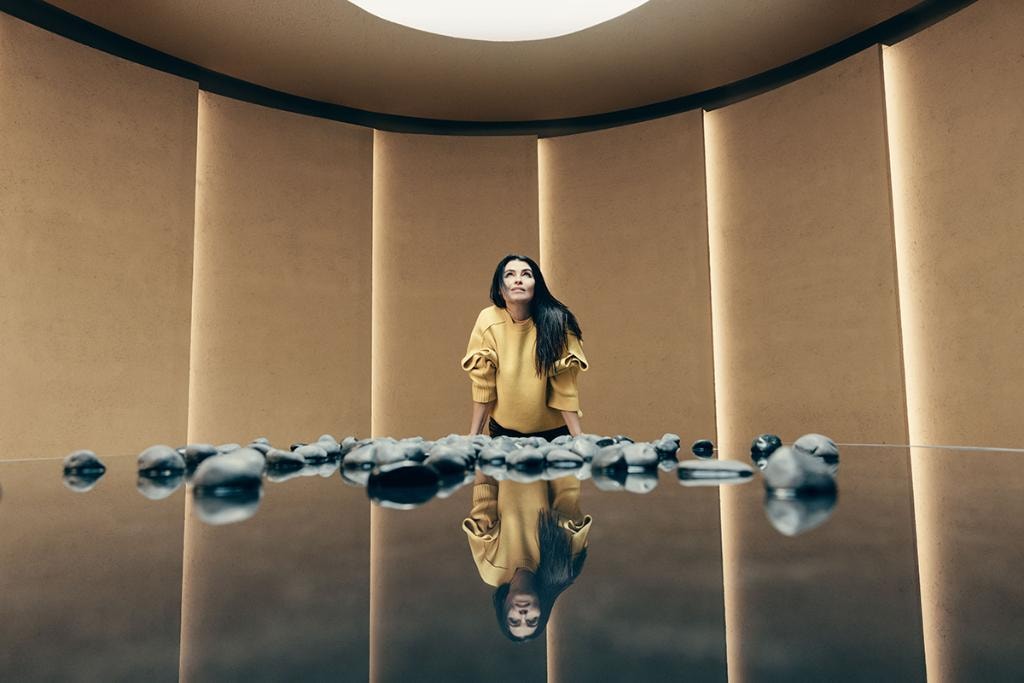
There is a moment in almost every major concert tour when the audience stops thinking about the music and simply stares. The stage has done something unexpected. A structure has risen or collapsed. Light has transformed a familiar space into something unrecognizable. The performer has become part of an environment so carefully constructed that the line between architecture and theater has disappeared entirely.
That moment, more often than not, belongs to Es Devlin.
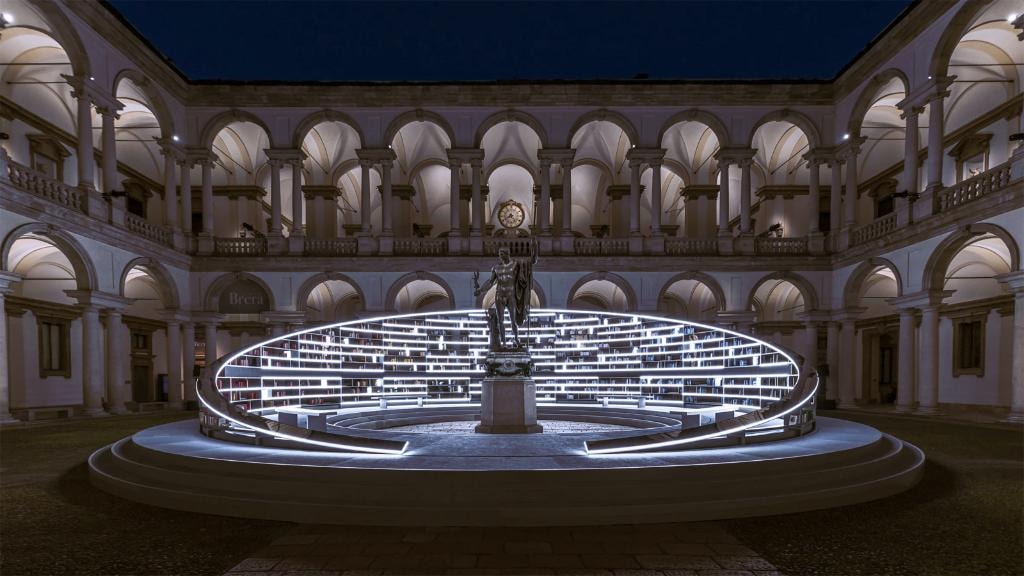
Over the past two decades, the British set and stage designer has built some of the most visually arresting live experiences in the world. Her clients include Beyonce, Adele, Kanye West, U2, The Weeknd, Miley Cyrus, and Lady Gaga. She has designed the Super Bowl halftime show, the closing ceremony of the London 2012 Olympics, and productions for the Royal Opera House, the National Theatre, and the Metropolitan Opera. She has collaborated with Louis Vuitton, Chanel, and Burberry. She has created public art installations on three continents.
"Every stage is a question. What does this person need to say, and what is the largest, most honest way to say it?"
What makes Devlin remarkable is not simply the scale of her work, though the scale is genuinely staggering. It is the consistency of her thinking across wildly different contexts. Whether she is designing a stadium tour for an artist playing to 80,000 people a night or a chamber opera for 300, the underlying question is always the same: what does this moment need to feel like, and how do you build that feeling out of light, structure, and space?
Devlin runs Studio Es Devlin, a London-based practice that operates at the intersection of architecture, theater, and large-scale installation. The studio is deliberately small for the volume of work it produces, a reflection of Devlin's belief that the quality of thinking matters more than the size of the team.
Her business model is unusual in the creative industries. She does not manufacture anything. She does not own the stages she designs or the productions she shapes. What she sells is vision: the ability to translate an artist's identity, a brand's values, or a cultural moment into a physical environment that an audience will remember long after they leave.
That is a harder thing to price than a product. It is also, increasingly, one of the most valuable things in the experience economy.
Live events have become one of the few categories where consumers consistently demonstrate a willingness to spend significantly more than they expect to. Concert ticket prices have risen sharply for over a decade. Demand for premium experiences, from front-row seats to backstage access to exclusive merchandise, continues to outpace supply. The live moment, precisely because it cannot be streamed or replicated, has become a premium product in its own right.
"The stage is not a backdrop. It is an argument. It is the artist saying: this is what I believe, this is what I am, and I built this entire world to show you."
Devlin's influence on the fashion and luxury industries has been substantial. Her work with major houses has helped shift how brands think about the runway show, the product launch, and the brand experience more broadly.
For years, fashion shows were primarily press events: a room, a runway, an audience of editors and buyers. Devlin helped demonstrate that the show itself could be a cultural statement, something people talked about, photographed, and remembered not just for the clothes but for the world that surrounded them.
That lesson has spread well beyond fashion. Brands across industries now invest heavily in the physical environments they create for consumers, whether that is a retail space, a pop-up installation, a product launch, or a conference. The underlying logic is Devlin's: the experience of a brand is inseparable from the space in which you encounter it.
In recent years, Devlin has moved increasingly toward public art, a shift that reflects both her ambitions and her concerns about the world she is designing for.
Her installation Please Feed the Lions, commissioned for the fourth plinth in Trafalgar Square, invited passersby to speak words into a microphone and watch them appear on a glowing lion sculpture. Her work Forest for Change, created for the United Nations Climate Change Conference, used light and language to make the scale of deforestation viscerally legible to people who would never visit a rainforest.
These projects are not commercial in the traditional sense. But they demonstrate something important about how Devlin thinks about her practice. She is not simply a designer for hire. She is an artist with a point of view about what public space is for, what live experience can do, and what it means to build something that asks something of the people who encounter it.
One of the most instructive things about Devlin's career is how she approaches collaboration. She does not arrive with a signature style that she imposes on every project. She arrives with a process: deep listening, rigorous questioning, and a commitment to finding the visual language that belongs to this artist, this moment, this audience.
That approach has made her one of the most sought-after creative partners in the world. Artists and brands return to her not because she gives them what they expect, but because she gives them something they could not have imagined on their own.
It is also a model that has lessons for anyone building a creative practice. The designers, consultants, and creative directors who build lasting careers are rarely the ones with the most distinctive personal style. They are the ones who are genuinely curious about other people's visions and skilled at making those visions larger than they would otherwise be.
Devlin has spoken publicly about her interest in the relationship between technology and live experience, particularly the question of what presence means in an era when so much of life has migrated to screens.
Her answer, characteristically, is not to compete with screens but to do what screens cannot. To build environments that require a body in a room. To create experiences that depend on the fact that you are here, in this place, at this moment, with these other people.
In an economy that has spent a decade trying to digitize everything, that turns out to be a genuinely scarce and valuable thing to offer.
Es Devlin has built a career on the conviction that the live experience is not a lesser version of something else. It is the thing itself. And in a world that keeps forgetting that, she keeps building reminders.
About the author
Liz PlummerLiz Plummer is an executive producer, creative director, and arts contributor. She covers contemporary artists, design, architecture, creative entrepreneurship, and the cultural forces shaping modern business.