Creative Profiles
Es Devlin: The Stage Designer Who Turned Performance Into Architecture
Liz Plummer9 min read
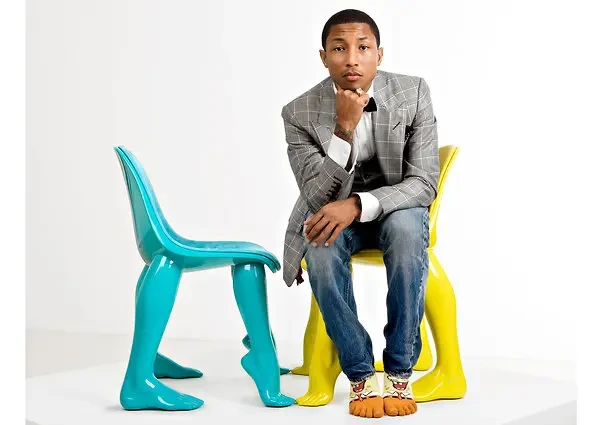
He built Billionaire Boys Club before streetwear was luxury. He curated art shows before musicians were taken seriously in galleries. He took the top job at Louis Vuitton before the fashion world knew what to make of him. Pharrell has always been five moves ahead.
Sydney Carter
Arts & Business Contributor
There was a time when being taken seriously as a creative meant picking a lane.
Musicians made music. Artists made art. Fashion designers made clothes. Luxury brands operated in a universe far removed from skate shops and streetwear.
Pharrell Williams never seemed particularly interested in those rules.
For more than two decades, he has moved between music, fashion, contemporary art, design and business with a fluidity that once seemed unusual and now looks remarkably predictive.
"He had been building his own version of it for decades."
To understand Pharrell's influence on fashion, you have to go back to Japan.
The timing matters.
This was before streetwear had been fully absorbed by the luxury establishment. Sneakers weren't yet treated like investment pieces by mainstream consumers. Celebrity fashion collaborations weren't announced every other week. The idea that hip-hop, skate culture, Japanese design and European luxury could comfortably occupy the same conversation was still developing.
Pharrell wasn't simply wearing cool clothes.
He was participating in an emerging creative ecosystem that would eventually transform fashion.
Astronauts. Diamonds. Spaceships. Skateboards. Sneakers. Graphic-heavy clothing.
The brand wasn't designed to look like a traditional luxury house. It created its own visual language.
"Creativity works better when you build a world around it."
Music was part of that world, but so were clothes, objects, interiors, jewelry and art.
Pharrell's relationship with contemporary art became especially significant. Over the years, his creative orbit has included artists including Takashi Murakami, KAWS, Daniel Arsham, JR and Alex Katz. His projects have crossed into furniture and collectible design, and in 2014 he curated G I R L at Galerie Perrotin in Paris, bringing together work from an extraordinary roster that included Murakami, Arsham, KAWS, Marina Abramovic, Cindy Sherman, Yoko Ono, Tracey Emin and others.
That makes calling Pharrell a "fashion designer" almost as limiting as calling him a musician.
His real interest seems to be in ideas and the different forms those ideas can take. A song can become a visual. A fashion collection can become an environment. A sneaker can become a collectible. An artist can influence a musician who influences a designer who influences an entire brand.
Today that kind of creative cross-pollination is practically an industry requirement.
Pharrell was doing it before brands had departments dedicated to figuring out how to do it.
So his arrival wasn't really a musician unexpectedly wandering into one of fashion's biggest jobs.
It was the culmination of a creative trajectory that had been moving toward this moment for years.
"The outsiders didn't exactly enter the establishment. The establishment moved toward them."
Nearly every major company today wants to participate in culture.
Luxury brands collaborate with artists. Musicians launch fashion labels. Fashion houses create immersive installations. Artists design sneakers. Brands sponsor exhibitions. Runway shows increasingly resemble concerts, films, architectural installations and social-media spectacles.
The boundaries have become almost meaningless.
Which is precisely why Pharrell's career feels so relevant now.
He understood that people don't experience creativity according to industry categories. Someone who loves a Murakami painting might also obsess over a sneaker. Someone discovering a musician might become interested in the clothes they're wearing. Someone who enters Louis Vuitton because of fashion might leave fascinated by architecture, craftsmanship or music.
Creativity travels.
And Pharrell built a career around following it.
There is a broader lesson in Pharrell's trajectory, particularly for the next generation of artists and creatives.
For years, people were encouraged to specialize. Pick the thing you're good at. Become known for it. Stay focused.
There is obviously value in mastery.
But some of the most influential creative careers are built by people willing to follow their curiosity beyond the category that originally made them successful.
Pharrell didn't stop being a musician when he became interested in fashion. He didn't need to become a traditional gallery artist to participate meaningfully in contemporary art. And he didn't spend decades climbing the conventional fashion ladder before taking one of the biggest creative jobs in the industry.
Instead, each discipline informed the next. Music shaped fashion. Fashion connected with art. Art influenced design. Design became business. Business created larger platforms for creativity.
That isn't a side project.
It is the career.
And in an era obsessed with personal brands, collaborations and the "creative economy," Pharrell Williams may have demonstrated the model years before everyone else gave it a name.
Maybe the most interesting thing about his Louis Vuitton chapter isn't that a musician became the creative director of a legendary fashion house.
It's that, after more than 20 years of refusing to be defined by a single medium, the title finally caught up with the artist.
About the author
Sydney Carter
Sydney Carter covers the business of media, entertainment, and the creators reshaping how audiences connect with content.